 comparison
Smart Lock vs. Traditional Lock: A 2026 Comparison
Table of Contents
- Smart Lock vs. Traditional Lock: Core Differences
- How Smart Lock vs. Traditional Lock Security Compares
- Best Smart Locks for Residential Doors
- Smart Lock Installation: What to Expect
- Smart Lock Battery Backup and Power Failure Protection
- Cost Comparison: Smart Locks vs. Traditional Locks
- When to Choose a Smart Lock vs. a Traditional Lock
- Why Professional Installation Matters
- Frequently Asked Questions
Last Updated: October 8, 2026
Smart Lock vs. Traditional Lock: Core Differences
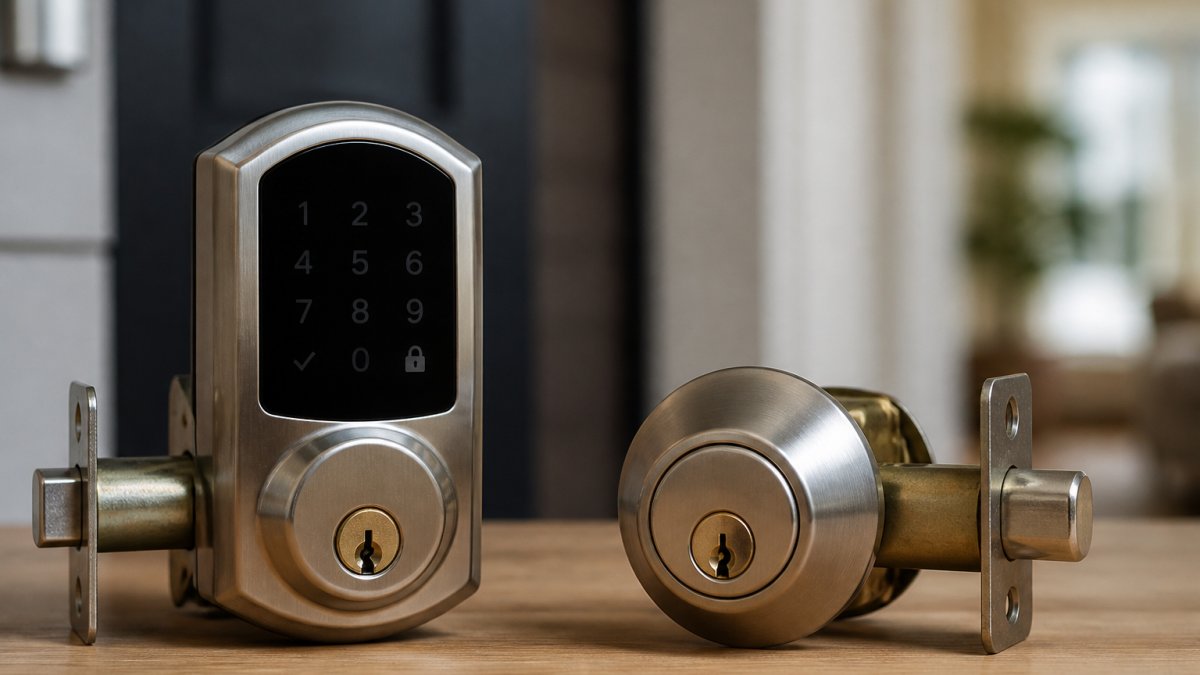
When comparing a smart lock vs traditional lock, the distinction is clear: a smart lock is an electronic deadbolt replacement that opens via smartphone app, keypad, fingerprint, or physical key, while a traditional lock uses only a physical key in a mechanical cylinder.
Smart locks connect to your home network (usually Wi-Fi or Bluetooth) and let you unlock remotely, grant temporary access codes, and receive entry notifications. Traditional locks offer no electronic monitoring, remote access, or audit trail.
For homeowners deciding between the two, the choice hinges on three questions: Do you want remote access and monitoring? Are you comfortable with battery-dependent hardware? Can your door frame accommodate the smart lock's footprint?
How Smart Lock vs. Traditional Lock Security Compares
Smart locks and traditional locks protect your home through different mechanisms, so comparing security requires looking beyond the marketing.
A traditional deadbolt's security relies on bolt strength, strike plate quality, and resistance to picking or forcing. Its weakness is physical key management: if someone steals, copies, or finds a hidden key, your security is compromised instantly.
Smart locks add security through access control and audit trails: revoke codes instantly without rekeying, get unlock notifications, and grant temporary codes that expire automatically. But they introduce new vulnerabilities around network security, firmware updates, and battery availability.
The real difference comes down to threat model. A smart lock protects better against casual key theft, lost keys, and unauthorized copies. A traditional lock protects better against digital attacks, network breaches, and battery failure.
For homeowners in rural East Texas or those managing multiple properties, smart locks' remote access and temporary codes offer genuine advantages. At A-1 Locksmith, we recommend evaluating your specific vulnerabilities rather than assuming one technology is universally more secure.
Best Smart Locks for Residential Doors
If a smart lock fits your needs, the next step is finding one that works with your door and lifestyle. Not every smart lock fits every door frame, and installation difficulty varies significantly.
Aqara Smart Lock U100
The Aqara Smart Lock U100 combines a keypad and fingerprint reader into a single deadbolt replacement, for homeowners who want multiple access methods without separate hardware.
The fingerprint reader is the standout feature, responsive and rarely requiring a retry, and the keypad handles temporary codes well for contractors or guests. Installation requires removing your existing deadbolt and fitting the Aqara mechanism into the same space, which works on most standard residential doors.
The trade-off is that the Aqara U100 doesn't integrate with major smart-home ecosystems as seamlessly as some competitors, so if you're building a connected home around Alexa or Google Home, expect more friction. For homeowners prioritizing fingerprint access and keypad convenience over ecosystem integration, it's a solid choice.
August Smart Lock
August Smart Lock stands out for straightforward installation and design. It mounts over your existing deadbolt without removing it, which means less disassembly and faster setup than most competitors.
The design is intentionally minimalist, looking like a normal lock from outside, which appeals to homeowners who don't want their front door to broadcast "smart home." The mobile app integrates cleanly with smart-home platforms and pairs well with existing August hardware.
The limitation is that mounting over an existing deadbolt means it doesn't replace the lock entirely, and some homeowners prefer a full replacement for cleaner aesthetics and simpler mechanics. If ease of installation and smart-home integration are your priority, August delivers.
Eufy Smart Lock C34
Eufy Smart Lock C34 is the budget option, and it delivers without feeling cheap. It's a full deadbolt replacement that works reliably and needs no hub or subscription for basic functionality.
The Eufy C34 handles keypad entry, temporary codes, and basic notifications. The design is utilitarian rather than sleek, but durable with straightforward mechanics. Installation is standard deadbolt-replacement complexity, so you'll likely want professional help unless you're comfortable with basic door hardware.
For homeowners on a budget who prioritize function over aesthetics, the Eufy C34 is the practical choice. It won't impress design-conscious visitors, but it will lock and unlock reliably.
Schlage Connect
Schlage Connect is an established smart lock from a manufacturer with decades of residential and commercial lock experience, offering proven reliability and integration with major smart-home platforms.
Schlage Connect replaces your existing deadbolt and connects via Wi-Fi or Z-Wave, depending on the model. Its pedigree means installation and mechanics follow familiar patterns, so if you've ever had a deadbolt serviced, the Schlage approach feels natural.
The trade-off is that Schlage's smart locks are typically priced higher than newer competitors, since you're paying for brand reputation and ecosystem compatibility. If you're already invested in a Schlage lock or prefer a manufacturer you trust, Schlage Connect is a defensible choice.
Smart Lock Installation: What to Expect
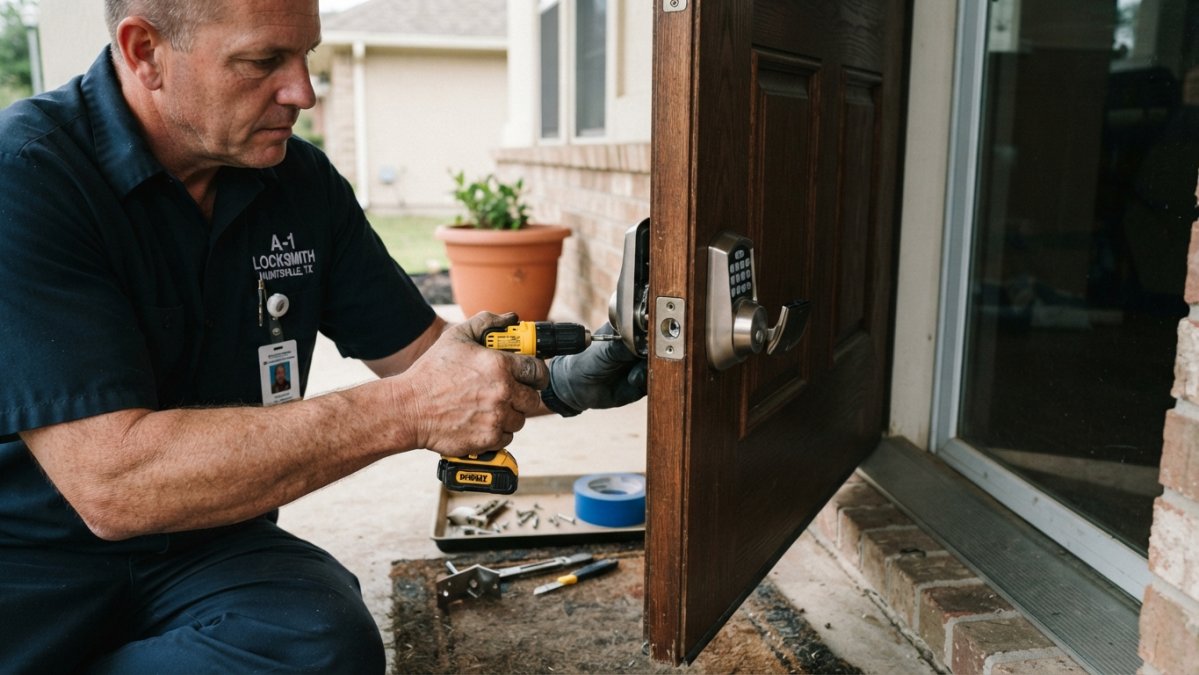
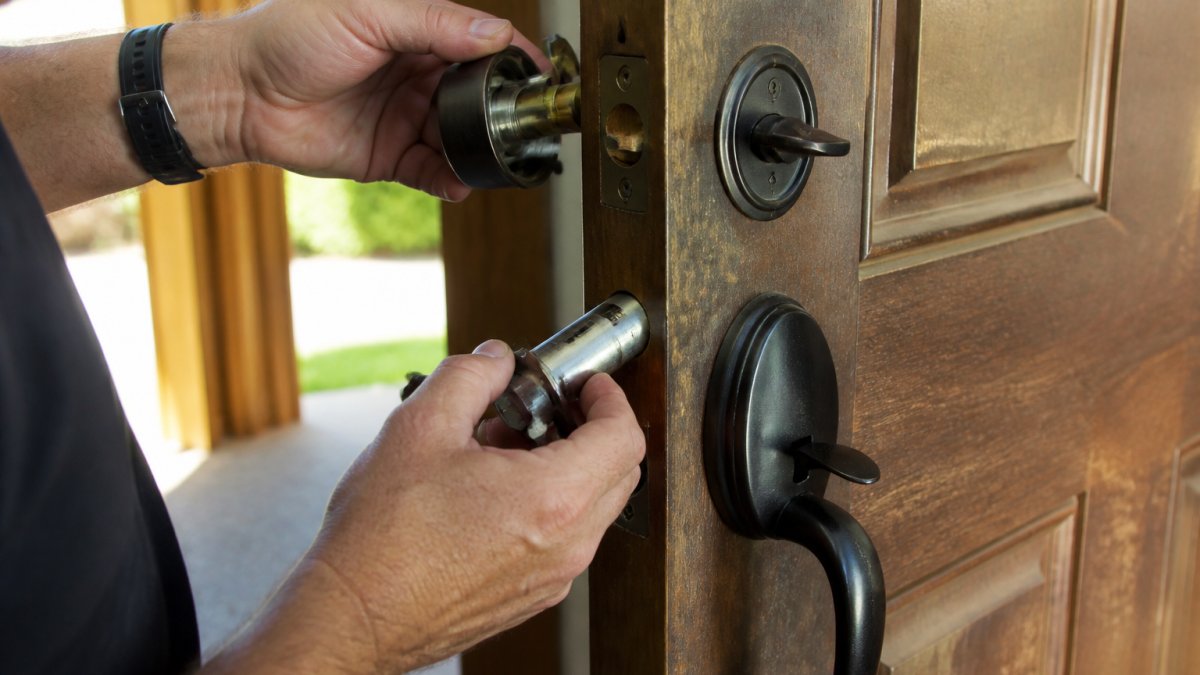
Smart lock installation involves removing your existing deadbolt, fitting the new mechanism into the door, and connecting it to your home network. Physical installation typically takes 30-60 minutes on a standard door frame; the complexity comes from network setup and compatibility verification.
Professional Installation vs. DIY
Professional installation guarantees the lock is fitted correctly and compatibility issues are caught before they become problems. A licensed locksmith can diagnose whether your door frame accommodates the smart lock's size, whether your strike plate needs adjustment, and whether the mechanism aligns with your existing bore holes.
DIY installation is possible if you're comfortable with basic tools and door hardware, and most manufacturers provide step-by-step instructions. The risk is misalignment causing the lock to jam or fail to latch, and then you'll call a locksmith anyway, paying for both the failed DIY attempt and the professional fix.
Professional installation for smart locks is recommended. A misaligned smart lock is both a security vulnerability and a daily frustration.
Compatibility and Door Requirements
Not every smart lock fits every door.
The second issue is existing bore holes. If your door has an old deadbolt, the bore hole may not align perfectly with the smart lock's mechanism. A locksmith can adjust it or recommend a different model that fits your door.
The third consideration is the strike plate. Smart locks sometimes require a deeper recess than traditional locks, and without enough clearance the lock won't latch properly even if everything else is installed correctly.
Before purchasing a smart lock, measure your door thickness and take a photo of your existing deadbolt setup. Share these with a locksmith or the smart lock manufacturer to confirm compatibility. This five-minute step prevents expensive installation failures.
Smart Lock Battery Backup and Power Failure Protection
Smart locks are powered by batteries, typically four AA or nine-volt batteries depending on the model.
When the battery dies, most smart locks have a physical key override. This means you can still unlock the door with a traditional key, which defeats the entire convenience advantage of a smart lock but ensures you're not locked out.
The practical implication is that smart lock users need to develop a habit of checking battery status through the mobile app and replacing batteries before they fully deplete.
For homeowners who travel frequently or manage rental properties, this battery dependency is a real drawback. A traditional lock never requires battery replacement and never fails due to power loss.
Cost Comparison: Smart Locks vs. Traditional Locks
| Item | Smart Lock | Traditional Lock |
|---|---|---|
| Hardware cost | Variable; contact A-1 Locksmith for current pricing | Typically lower than smart locks |
| Professional installation | Recommended; pricing depends on door compatibility | Standard deadbolt replacement cost |
| Battery replacement | Annual or biannual, minimal cost | No batteries required |
| Rekeying (if needed) | Often requires replacement of entire lock | Mechanical rekeying by locksmith |
| Remote access capability | Yes | No |
| Temporary access codes | Yes | No |
| Audit trail/notifications | Yes | No |
A traditional deadbolt costs less upfront and has no ongoing battery expenses. A smart lock costs more initially but eliminates the need for physical key management and provides remote monitoring. The long-term cost difference depends on how often you need rekeying, how many temporary access codes you grant, and whether you value remote access.
For homeowners who change locks frequently due to moved-in roommates, contractors, or property management needs, a smart lock's ability to revoke access codes without rekeying saves money over time. For homeowners who keep the same lock for years without changes, a traditional lock is the more economical choice.
When to Choose a Smart Lock vs. a Traditional Lock
In the smart lock vs traditional lock decision, choose a smart lock if you want remote access, temporary access codes, or activity notifications. Smart locks excel for rental properties, multi-family homes, and households with frequent guest access.
Choose a traditional lock if you prioritize mechanical simplicity, zero battery dependency, and lowest upfront cost. Traditional locks are ideal for vacation homes, outbuildings, and homeowners who value reliability over convenience. They're also the right choice if your door frame has compatibility issues with smart lock hardware.
The decision isn't about which technology is objectively superior. It's about which solves your actual access and security problems. A smart lock in a vacation home you visit twice yearly is overkill.
Why Professional Installation Matters
Professional installation ensures three critical outcomes: compatibility verification, proper alignment, and warranty protection.
A licensed locksmith can identify compatibility issues before installation begins.
Proper alignment is the second reason professional installation matters. A misaligned smart lock will jam, fail to latch, or require excessive force to operate.
The third benefit is warranty protection. Most smart lock manufacturers require professional installation to honor the warranty. If you install the lock yourself and it fails, the manufacturer may refuse to replace it.
At A-1 Locksmith, we can diagnose your door's compatibility, recommend the right lock for your needs, and install it correctly.
Upgrading your lock, whether to a smart lock or a higher-quality traditional deadbolt, is one of the most practical security investments you can make.
Frequently Asked Questions
Should I choose a smart lock or a traditional lock?
The choice depends on your priorities. Traditional locks offer simplicity, no battery concerns, and proven durability. Smart locks provide keyless entry, remote access via smartphone, and detailed access logs. If you value convenience and remote management, a smart lock is worth the investment. If you prefer minimal technology and lower upfront costs, a traditional lock remains reliable. Many homeowners use both: a smart lock on the front door and traditional locks elsewhere.
What happens if a smart lock loses power or its app stops working?
Most smart locks include a physical keypad or backup key slot, so you can still unlock the door manually if the battery dies or the app fails. Many models also feature low-battery alerts via smartphone notification, giving you time to replace batteries before a lockout occurs. Some smart locks retain temporary access codes even during power loss. Always confirm backup access methods before installation, and keep a physical key in a secure location as a final failsafe.
Can a locksmith install and configure a smart lock?
Yes. Licensed locksmiths like A-1 Locksmith handle smart lock installation, setup, and integration with your mobile app. Professional installation ensures proper door compatibility, secure mounting, correct wiring, and app configuration. This is especially valuable if your door frame requires adjustment or if you want expert guidance on access codes and backup keys. Professional installers can also diagnose compatibility issues and recommend the best model for your specific door type.
Are smart locks safer than traditional locks?
Both offer security, but in different ways. Smart locks eliminate the risk of lost physical keys and provide activity logs showing who entered and when. However, they introduce digital vulnerabilities like app hacking or network compromise. Traditional locks have no digital attack surface but can be picked or bypassed by physical force. For maximum security, combine a high-quality smart lock with strong app passwords, two-factor authentication, and regular firmware updates. Many security experts recommend smart locks for homes where convenience and monitoring matter most.