 ultimate-guide
Commercial Vault Repair Service Guide
Table of Contents
- Understanding Commercial Vault Repair Needs
- Vault Inspection Checklist for Property Owners
- Responding to a Vault Lockout Service Emergency
- Commercial Safe Repair: Components and Costs
- Commercial Vault Maintenance Best Practices
- Selecting a Qualified Commercial Vault Repair Professional
- Business Continuity and Emergency Planning
- Frequently Asked Questions
Last Updated: October 4, 2026
Understanding Commercial Vault Repair Needs
A commercial vault repair is the process of diagnosing, servicing, and restoring functionality to secure storage systems in businesses, financial institutions, and commercial properties. When a vault malfunctions, you lose access to critical assets, your business halts, and your security weakens. Understanding what goes wrong and when to call for help prevents costly emergencies.
Vaults fail predictably: hinges wear from repeated use, door closers lose pressure, locking mechanisms jam from dust or corrosion, and time locks malfunction. Recognizing these signs early prevents complete lockouts.
Common vault problems and failure signs
The most common issue is a sluggish or stuck door.
Listen for grinding or clicking sounds when operating the vault. These indicate internal lockwork damage or failing time locks and typically lead to complete lockout within days or weeks if ignored.
Check bolt work carefully. If bolts don't retract fully or stick partway, the relocker mechanism may be engaged or the bolt housing misaligned.
Visible corrosion, rust, or moisture around seals and hinges signals environmental exposure. Corrosion compromises security and function, and water damage accelerates internal component failure.
Vault types and repair considerations
Different vault types have different repair needs.
Bank and financial vaults are heavily engineered with multiple locking mechanisms, time delays, and relocker systems. Repairs require specialized training.
Commercial safes and deposit boxes require precision work on door alignment, hinges, and locks. Common in retail shops, medical offices, and small businesses.
Data center and server room vaults prioritize climate control and electromagnetic shielding. Repair work must account for environmental and electrical systems.
Medication and controlled-substance vaults must maintain DEA and state pharmacy board compliance during repairs.
Vault Inspection Checklist for Property Owners
Regular inspection catches problems before they become emergencies. A quarterly 15-minute walkthrough can save thousands in downtime.
What to look for during routine inspections
Open and close the door slowly, does it swing freely or bind? Examine hinges for corrosion, gaps, or misalignment. Test the locking mechanism: does the bolt retract smoothly and extend fully? Listen for grinding, clicking, or hesitation, which indicate internal wear.
Check seals and gaskets around the door frame, they should be intact and pliable. Look for visible rust, discoloration, or moisture around the vault exterior, especially near corners, floors, and air vents.
Documentation and condition records
Keep a simple log recording the date, issues noticed, and work performed. Document emergency lockouts, repair visits, and parts replaced. This history helps technicians and lets you track patterns, if hinges fail every 18 months, you can schedule preventive replacement proactively.
Take photos of visible problems. This gives technicians context and protects you if disputes arise about failure causes.
Responding to a Vault Lockout Service Emergency
A locked vault is a business crisis. Your response in the first hour determines whether you minimize downtime or escalate the emergency.
Steps to take immediately when locked out
Do not force the door. Attempting to pry, drill, or break it can trigger the relocker mechanism, permanently locking the door until a technician disengages it.
Call a qualified commercial vault repair service immediately with your vault's make, model, and year.
Ask about response time. A reputable service should offer 24/7 emergency dispatch with arrival within 1-2 hours.
Secure the area around the vault. Prevent employees from attempting to open it or tampering with the mechanism. Document the time the lockout occurred and notify management.
What to expect from emergency response
A qualified technician will arrive with diagnostic tools and expertise to assess the situation without additional damage. They'll determine whether the issue is mechanical (hinges, bolts, closer) or electronic (time lock, relocker) and explain your options.
Mechanical failures often repair within 1-2 hours. Electronic or relocker issues may require manufacturer contact, extending the process.
The technician will test the vault thoroughly with multiple open-close cycles, combination locks, and bolt verification before declaring it operational.
Commercial Safe Repair: Components and Costs
Understanding what breaks and why helps you evaluate repair estimates and make informed decisions about replacement.
Hinges, closers, latches, and lockwork
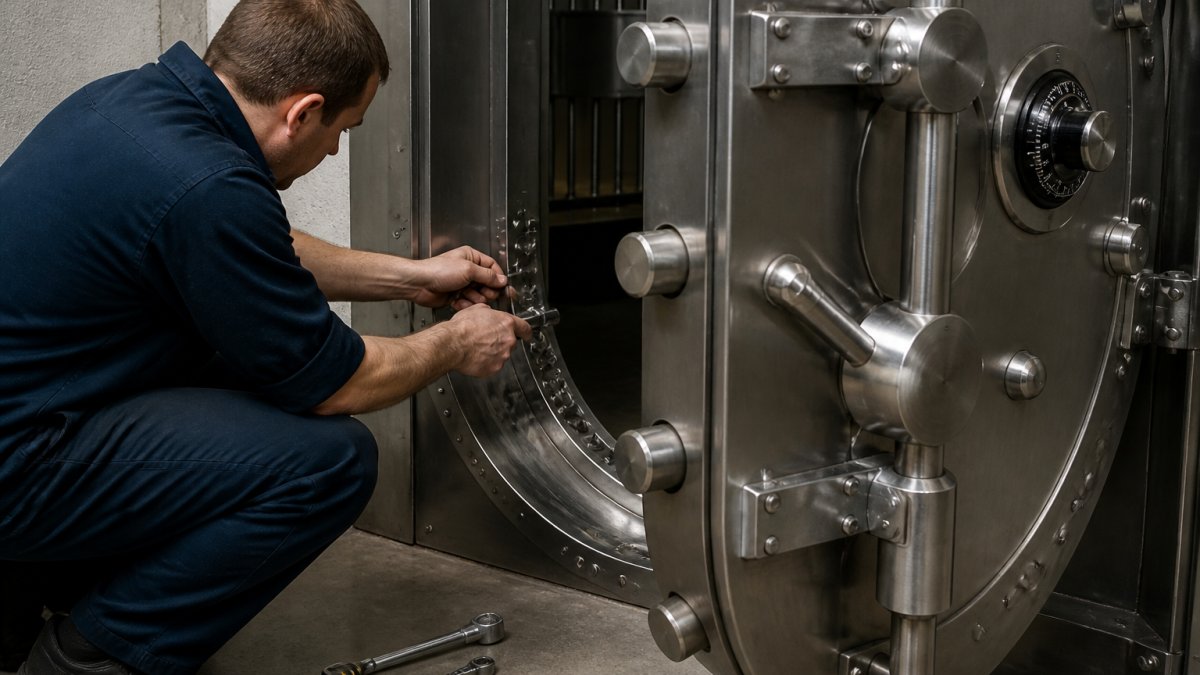
Hinges bear the door's full weight through thousands of cycles. Worn hinges cause sagging, binding, or uneven hanging; replacement resolves alignment and closing issues. Door closers control closing speed; failing closers cause slamming or slow closure. Replacement improves security and usability.
Latches and bolts can stick, fail to engage, or misalign; repairs require precision alignment. Lockwork includes lock cylinders, dials, or electronic mechanisms. Mechanical locks wear or jam; electronic locks fail from battery depletion, circuit damage, or sensor malfunction. Repair or replacement depends on type and severity.
Repair versus replacement decisions
Repair makes sense when damage is localized and repair costs less than 50% of replacement. Replacement becomes necessary when the vault is very old with unavailable parts, multiple systems fail, or repair costs approach replacement cost. Request written estimates for both options.
Consider the vault's remaining useful life. Short-term relocation favors repair; long-term placement may justify new systems with modern security features.
Factors affecting repair estimates
Common vault brands with available parts cost less to repair; older or specialized vaults may require custom parts or extended labor. Simple hinge replacement takes 1-2 hours; complex lockwork or electronic systems take 4-8 hours or more.
Daytime repairs cost less than after-hours or weekend emergency calls. Travel distance and accessibility affect cost, remote or difficult-to-access vaults incur higher service charges.
Commercial Vault Maintenance Best Practices
Preventive maintenance keeps your vault operational and extends its lifespan. A maintenance schedule prevents emergencies and reduces long-term costs.
Preventive maintenance schedule
Perform a visual inspection quarterly. Check for corrosion, misalignment, and smooth operation. This costs nothing and catches early warning signs.
Schedule professional maintenance annually or biannually, depending on usage frequency. A technician will lubricate moving parts, test all mechanisms, verify alignment, and identify components approaching failure.
For high-use vaults (those opened multiple times daily), increase inspection frequency to monthly and professional maintenance to quarterly. High usage accelerates wear.
Document all maintenance. Keep records of what was inspected, serviced, or replaced. This history helps technicians spot patterns and justifies replacement decisions if disputes arise.
Lubrication, alignment, and functional testing
Proper lubrication is critical. Hinges, closers, bolt mechanisms, and locks all require periodic lubrication with appropriate products. Use only lubricants recommended by the vault manufacturer, wrong lubricants can cause binding or corrosion.
Alignment must be verified regularly. A door that's out of alignment strains hinges, causes bolts to bind, and makes the lock difficult to operate. Technicians use precision tools to measure and correct misalignment.
Functional testing confirms that every component works as intended.
Selecting a Qualified Commercial Vault Repair Professional
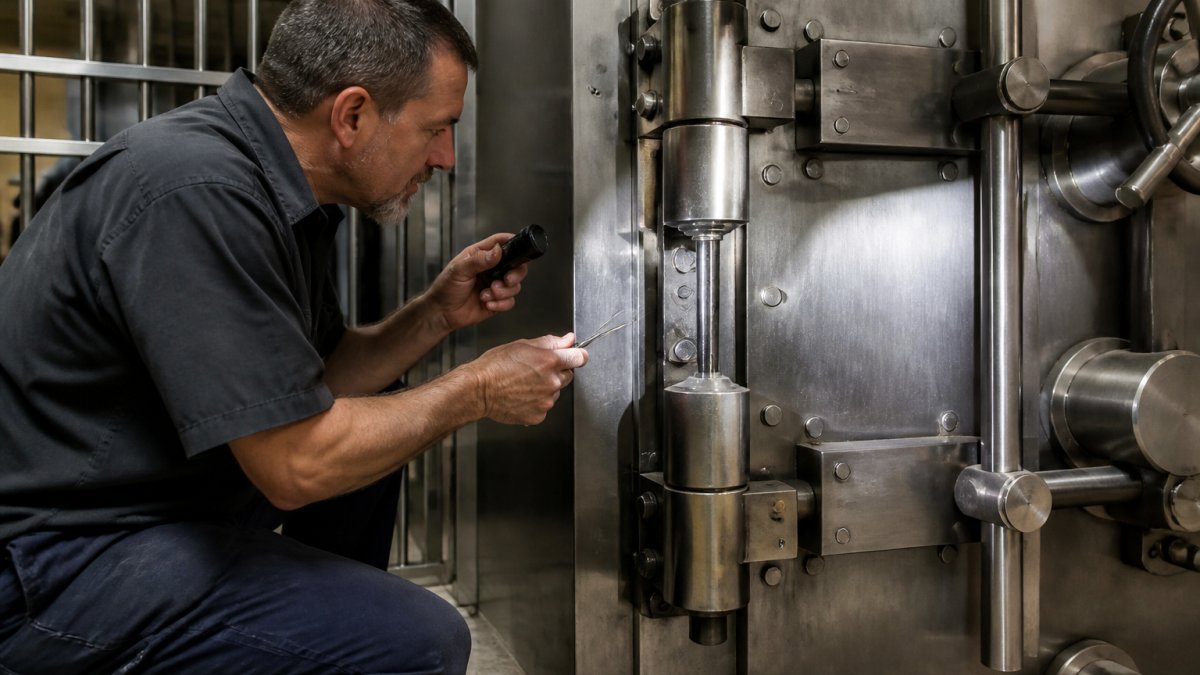
Not all locksmiths are qualified to repair vaults. Vault work requires specialized training, tools, and experience. Choosing the right technician is crucial.
Licensing, insurance, and compliance verification
Ask for proof of licensing. In most states, locksmiths must be licensed and bonded. Verify the license with your state's licensing board.
Confirm insurance coverage. The technician should carry general liability insurance and, ideally, errors and omissions insurance. This protects you if something goes wrong during the repair.
For vaults containing regulated materials (medications, controlled substances, financial records), verify that the technician understands compliance requirements.
Ask for references from previous clients. A qualified technician will provide contact information for businesses they've serviced.
Response time, service availability, and warranty
24/7 emergency availability is essential. Your vault can fail at any time, and you need a technician who can respond quickly, not one who only works 9-to-5.
Ask about typical response times. A local technician should arrive within 1-2 hours for a true emergency. Longer response times indicate understaffing or low priority placement.
Inquire about warranty on repairs. A reputable technician will guarantee their work for a specified period (typically 30-90 days).
At A-1 Locksmith, we maintain 24/7 emergency dispatch and prioritize rapid response to vault lockouts and failures.
Security protocols and access control during service
The technician should understand that a vault is a sensitive asset. They should follow your facility's security protocols, sign in and out, and never compromise access control procedures.
Ask how they'll maintain confidentiality. A professional technician will not discuss vault contents, combinations, or security measures with unauthorized personnel.
Verify that they use secure, traceable tools and parts. Reputable technicians document what they bring into your facility and what they remove or install.
Business Continuity and Emergency Planning
A vault failure can disrupt operations significantly. Planning ahead reduces impact and accelerates recovery.
Minimizing downtime and access disruption
Identify which business functions depend on vault access. Financial transactions, medication dispensing, document retrieval, these processes halt if the vault is locked. Knowing your critical dependencies helps you prioritize repair urgency.
Maintain a backup communication plan. If your primary technician is unavailable, know who to call second. Having multiple qualified vendors identified in advance prevents scrambling during an emergency.
Consider scheduling non-urgent maintenance during low-traffic periods or after hours when possible. This minimizes disruption to daily operations.
For businesses with multiple vaults, stagger maintenance schedules so not all vaults are out of service simultaneously.
Post-repair verification and documentation
Conduct your own verification. Open and close the vault multiple times. Test the lock mechanism. Verify that bolts engage and retract smoothly.
Ask the technician to explain what failed and why. Understanding the root cause helps you prevent recurrence.
Photograph the repaired components for your records. If the same issue recurs later, photos provide evidence of what was done previously.
Commercial vault repair isn't a DIY matter, and delays cost money fast.
Frequently Asked Questions
What does commercial vault repair service include?
Commercial vault repair service covers diagnosis of lock and hardware problems, repair or replacement of hinges, closers, latches, and lockwork, alignment adjustments, functional testing, and documentation of repairs. Services may include emergency lockout assistance, preventive maintenance, and security upgrades. A qualified technician will inspect the vault, identify the specific issue, and recommend repair or replacement options based on the vault's condition and your business needs.
What are common signs that a commercial vault needs repair?
Common warning signs include difficulty opening or closing the door, grinding or unusual sounds during operation, misalignment of the door frame, visible rust or corrosion on hardware, lock mechanism failures, and inability to secure the vault properly. If the vault is slow to close, the door sticks, or the locking mechanism feels loose, schedule an inspection immediately. Regular inspections help catch problems early before they affect business operations or security.
How often should a commercial vault be inspected and maintained?
Most commercial vaults benefit from preventive maintenance at least twice per year, though high-use vaults may need quarterly inspections. Regular maintenance includes lubrication of moving parts, alignment checks, functional testing of locks and closers, and hardware inspection. Maintenance schedules depend on vault type, usage frequency, and environmental conditions. Establishing a routine maintenance plan reduces emergency repairs, extends equipment life, and ensures your vault remains secure and operational.
How do I choose a qualified commercial vault repair technician?
Verify that the technician is licensed, insured, and has specific experience with commercial vault systems. Ask about response time for emergency calls, availability for after-hours service, and warranty on repairs. Request references from other commercial clients and confirm they understand your vault type and security requirements. A qualified professional will provide a clear estimate, explain the repair process, and follow security protocols to protect access control during service.
What should I do if a commercial vault will not open?
Do not attempt to force the door open, as this can damage the locking mechanism further. Contact a commercial vault lockout service immediately for emergency assistance. Provide the service provider with information about the vault type, when it was last serviced, and any recent issues. A qualified technician will diagnose the problem and determine whether the lock can be repaired or needs replacement. Document the incident for security records and insurance purposes.
Can a commercial vault lock be repaired without replacing the entire lock?
In many cases, yes. A qualified technician can often repair individual components like the locking mechanism, relocker, or time lock without replacing the entire lock assembly. However, if the lock is severely damaged, corroded, or obsolete, replacement may be more cost-effective and secure. A professional inspection will determine whether repair is practical or if replacement is the better option for long-term reliability and security.