 ultimate-guide
How to Choose Residential Door Locks: A Homeowner's Guide
Table of Contents
- Understanding ANSI Grade 1 Door Locks and Security Ratings
- Single-Cylinder vs. Double-Cylinder Deadbolts: Which Type You Need
- How to Measure Door Lock Backset for Proper Fit
- Keyless Entry Methods: Biometric, Keypad, and Mobile App Options
- Smart Lock Installation Guide for Retrofit and New Build Doors
- Rekeying vs. Replacing Door Locks: When to Choose Each
- Door Hardware Finishes, Weather Resistance, and Long-Term Durability
- Conclusion
- Frequently Asked Questions
Last Updated: September 28, 2026
Understanding ANSI Grade 1 Door Locks and Security Ratings
ANSI Grade 1 door locks represent the highest security standard for residential applications. The American National Standards Institute establishes three grades for deadbolts, with Grade 1 offering the most strong forced entry resistance and durability. This rating means the lock has been tested to withstand repeated strikes, picking attempts, and sustained pressure far beyond what typical residential break-ins involve.
Grade 1 locks are tested to survive 10 strikes with a 75-pound hammer from 3 feet away and resist picking and bumping attacks. The strike plate and door frame matter equally; a Grade 1 lock installed on a weak frame defeats the entire purpose.
We recommend Grade 1 locks for all exterior doors, particularly entry points that face the street or are obscured from neighbors' view. Grade 2 locks work for secondary entrances, but Grade 1 is the only choice if security is your priority.
A Grade 1 lock's latch bolt must be at least one inch long and resist lateral pressure. The keyway design prevents bumping, a technique where attackers use specially cut keys to bypass the lock mechanism.
Single-Cylinder vs. Double-Cylinder Deadbolts: Which Type You Need
The choice between single-cylinder and double-cylinder deadbolts depends on your door's location and your security priorities. A single-cylinder deadbolt requires a key on the outside but unlocks from inside with a thumb turn. A double-cylinder deadbolt requires a key on both sides. Understanding this distinction is essential when choosing residential door locks for different entry points.
Single-cylinder locks are standard for most residential doors and allow quick exit without a key. If your door has glass panels near the lock, an intruder could break the glass and unlock it from inside; single-cylinder locks prevent this because the interior thumb turn remains inaccessible from outside.
Double-cylinder locks eliminate this vulnerability by requiring a key from both sides. However, they create a fire safety concern: if you're inside and need to exit quickly during an emergency, you must locate and use a key. Building codes in many jurisdictions restrict or prohibit double-cylinder locks on primary egress doors for this reason. Check your local building code before installing them.
Use single-cylinder Grade 1 locks on main entry doors and any doors with glass panels nearby. Reserve double-cylinder locks for secondary doors that don't serve as emergency exits.
How to Measure Door Lock Backset for Proper Fit
The backset is the distance from the edge of your door to the center of the lock hole. Getting this measurement right is non-negotiable when choosing residential door locks, an incorrect backset means the lock won't fit, no matter how high-quality it is. Most residential doors use either a 2⅜-inch or 2¾-inch backset, but measuring your specific door is the only way to be certain.
Close the door and measure from the inside edge to the center of the existing lock hole. This measurement tells you exactly what backset to order.
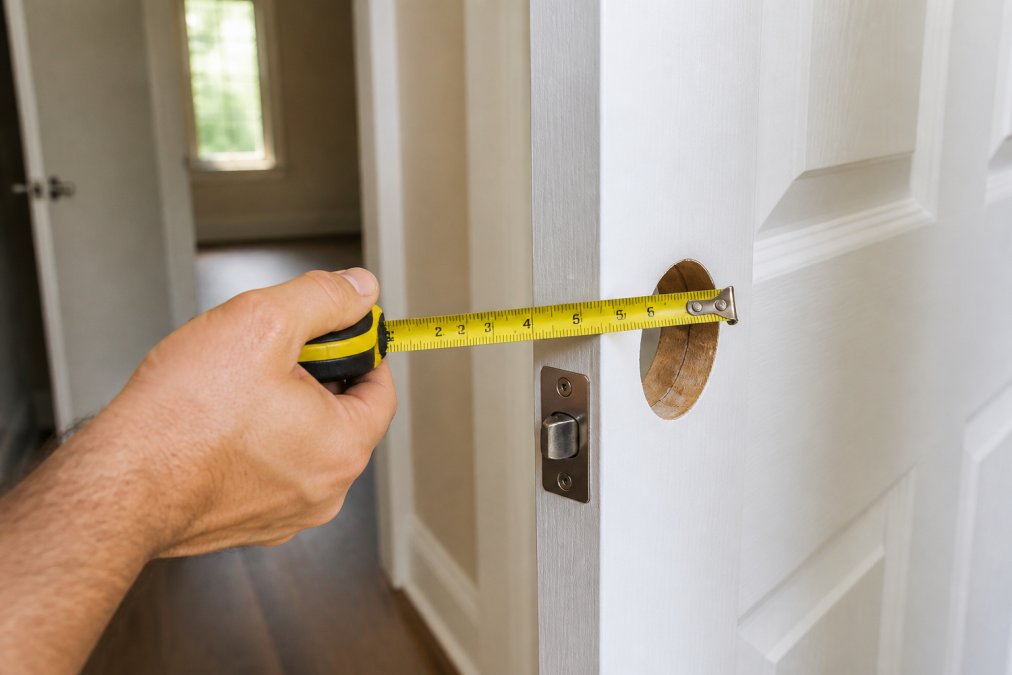
For new doors without existing holes, use the template provided with your lock kit to mark the backset and bore hole location. The bore hole is typically 2⅛ inches in diameter for standard deadbolts.
Common mistakes: measuring from the wrong edge, confusing backset with bore hole diameter, or assuming all doors use the same backset. Verify before you buy.
Keyless Entry Methods: Biometric, Keypad, and Mobile App Options
Keyless entry eliminates the need to carry keys while maintaining security. The three main methods, biometric authentication, keypad entry, and mobile app control, each offer different advantages depending on your lifestyle and technical comfort level. When choosing residential door locks with keyless features, consider how you and your household members will actually use the system.
Biometric authentication uses fingerprint scanning to unlock the door. Biometric locks are convenient and eliminate lost-key scenarios but require batteries and can fail if your fingers are wet, dirty, or injured. If you have young children or elderly family members with faint fingerprints, biometric locks may not work reliably.
Keypad entry requires a numeric code to unlock the door and allows temporary access for contractors, housecleaners, or guests without rekeying. Codes can expire after a certain date or number of uses. The main drawback is that codes can be observed or guessed, and keypads need strong weatherproofing.
Mobile app control lets you unlock the door from your smartphone, grant remote access, and receive notifications. This requires Wi-Fi or Bluetooth connectivity and a compatible app. The convenience is significant, but it depends on your phone battery and the manufacturer's app reliability.
Many modern locks work with Apple Home, Google Home, or Amazon Alexa, allowing voice control or automation routines. Before purchasing, verify compatibility with your existing smart home ecosystem.
Smart Lock Installation Guide for Retrofit and New Build Doors
Installing a smart lock differs depending on whether you're retrofitting an existing door or working with new construction. Both scenarios require careful planning, but the approach and considerations vary significantly. Understanding these differences helps you choose the right lock and installation method when upgrading residential door locks.
Retrofit installations work with existing doors and deadbolt holes. Measure your backset first to ensure the new lock fits. Most smart locks are drop-in replacements for standard deadbolts. Installation typically takes 15-30 minutes: remove the old lock, install the new one, and configure the app and access codes.
Smart locks require regular battery changes (typically every 6-12 months). Ensure you can easily access the battery compartment and test battery access before finalizing installation.
New build installations offer more flexibility.
Rekeying vs. Replacing Door Locks: When to Choose Each
The decision between rekeying and replacing residential door locks comes down to cost, security, and the lock's condition. Rekeying changes the key combination without replacing the physical lock. Replacing installs an entirely new lock. Both solve the problem of unwanted key access, but they serve different situations.
Rekeying is the right choice when:
- Your lock is in good condition and functions smoothly
- You've lost keys and want to prevent unauthorized access
- You've moved into a home where previous owners might have copies of the keys
- You want to consolidate multiple locks to one key
- Your lock is high-quality (Grade 1 or Grade 2) and worth preserving
Replacing is necessary when:
- Your lock is damaged, broken, or doesn't operate smoothly
- You're upgrading to a higher security grade (moving from Grade 3 to Grade 1)
- You want to switch from single-cylinder to double-cylinder, or vice versa
- You're installing a smart lock with keyless entry
- Your lock is old and worn, even if it technically still works
- You need a different finish or style to match your door hardware
Door Hardware Finishes, Weather Resistance, and Long-Term Durability
The finish on your lock and handle set affects both aesthetics and longevity. Common finishes include polished brass, satin nickel, oil-rubbed bronze, and stainless steel. Each has different durability characteristics and weather resistance properties. When choosing residential door locks, the finish you select will be visible every day and must withstand your local climate.
Conclusion
Choosing residential door locks involves evaluating security ratings, measuring your door accurately, and selecting features that match your lifestyle. ANSI Grade 1 locks provide the security foundation every home deserves. Whether you're rekeying an existing lock, upgrading to a smart system, or installing locks in a new home, the right choice starts with understanding your door's specifications and your security priorities.
Frequently Asked Questions
What is the difference between ANSI Grade 1, 2, and 3 locks?
ANSI grades measure forced entry resistance. Grade 1 locks withstand the most punishment, up to 5 minutes of deliberate attack with common tools, and are recommended for exterior doors on homes. Grade 2 locks resist about 3 minutes of attack and work well for secondary entrances. Grade 3 locks offer basic security for interior doors or low-risk areas. For your main entry, Grade 1 residential door locks provide the highest protection.
How do I determine the correct backset for my door lock?
Backset is the distance from the edge of the door to the center of the lock hole, measured in inches. Standard backsets are 2⅜ inches or 2¾ inches. Measure from the door's edge to the middle of your existing hole, or check your door's documentation. Getting the backset right ensures your new lock fits without requiring additional drilling. If you're unsure, a professional locksmith can measure and verify the correct backset for your door.
Are smart locks as secure as traditional deadbolts?
Quality smart locks can be as secure as traditional deadbolts when they meet ANSI standards and use strong encryption. Look for models with Grade 1 ratings, battery backup, and encryption that prevents hacking. The main security difference lies in the access method, biometric and keypad entry eliminate the risk of lost keys, but they depend on battery power. Combining a smart lock with a Grade 1 deadbolt mechanism gives you both convenience and proven security.
Should I rekey my locks or replace them entirely?
Rekey your locks if they're still in good condition and you've lost keys, moved into a new home, or need to change who has access. Rekeying adjusts the internal pins so old keys no longer work, preserving your existing hardware. Replace locks if they're damaged, won't lock properly, are outdated, or if you want to upgrade to a higher security grade or smart lock. A locksmith can assess your locks and recommend which option makes sense for your situation.