 How-to
How to Avoid Locksmith Hidden Fees: A Complete Guide
Table of Contents
- Why Locksmith Hidden Fees Happen and How They Affect You
- Questions to Ask a Locksmith Before Hiring
- Getting a Locksmith Estimate Before Work Begins
- Understanding Locksmith Service Call Fees and What They Cover
- Red Flags: Spotting Locksmith Overcharging Before It Happens
- What to Do When a Locksmith Raises the Price on Arrival
- Building a Relationship With a Trusted Local Locksmith
- Frequently Asked Questions
Last Updated: October 21, 2026
Why Locksmith Hidden Fees Happen and How They Affect You
To avoid locksmith hidden fees, understand that they are one of the most common complaints homeowners make after calling for emergency service.
Understanding why these fees exist helps you spot them before they surprise you. A call-out fee covers travel and fuel, a service fee covers inspection, labor accumulates once work begins, parts cost extra, and after-hours service often doubles the rate.
The real damage happens when you're locked out at midnight, stressed, vulnerable, and unlikely to negotiate. That's when some locksmiths quote low over the phone, then present a much higher bill on arrival. Knowing what to ask for puts you back in control.
Questions to Ask a Locksmith Before Hiring
Before you book a locksmith, ask these specific questions. Write down the answers.
Ask about the service fee. This covers the initial inspection and diagnosis, separate from the call-out fee. Get a specific number.
Ask about after-hours pricing. Nights, weekends, and holidays typically cost more. Ask what triggers the premium and by how much.
Ask what the quote includes. Does it cover labor only or parts too?
Ask if the quote is firm or an estimate. A firm quote is locked in; an estimate may change after inspection.
Ask about their licensing and insurance. Request proof. Licensed locksmiths are held to standards. Insured locksmiths protect you if something goes wrong.
Getting a Locksmith Estimate Before Work Begins
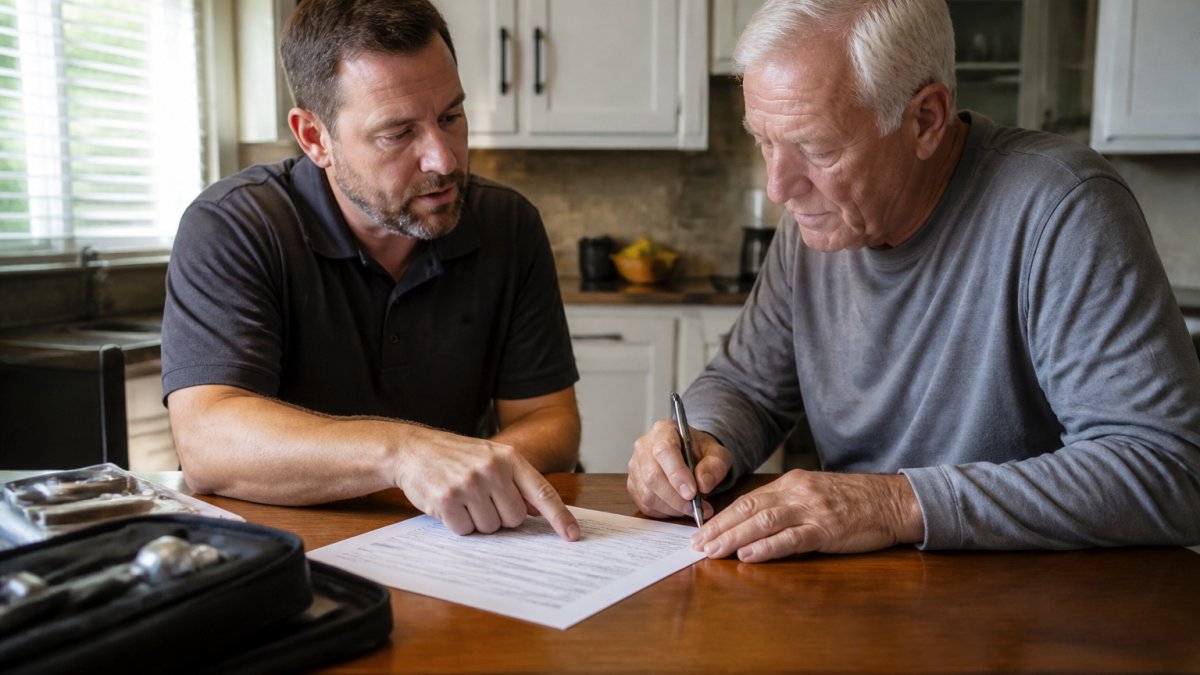
An estimate is your protection, a written prediction of cost before the technician picks up a tool. But a one-line "$150 for lockout" tells you almost nothing. To compare locksmiths fairly and spot hidden fees, you need an itemized quote.
The itemized quote checklist
Ask every locksmith to break the quote into these line items. If they can't or won't, that's a red flag.
- Call-out / trip fee, the charge just to arrive, separate from labor. Ask whether it is waived or credited if you approve the work.
- Service / diagnostic fee, the charge for inspecting and diagnosing the lock. Ask whether it is separate from the call-out fee or bundled with it.
- Labor, state whether it is a flat rate for the specific job or an hourly rate, and if hourly, ask for the hourly rate and any minimum (for example, a one-hour minimum).
- Parts, list each part by name (cylinder, deadbolt, knob, strike plate, key blank) with its individual price, not a lump "parts" figure.
- Emergency or after-hours surcharge, ask what hours trigger it and whether it is a flat add-on or a multiplier of the base rate.
- Travel or distance charge, ask whether it is per mile, per zone, or flat, and the exact rate.
- Taxes and permit fees, ask whether sales tax is included in the quoted figure and whether any permit or disposal fee applies.
- Total, a single bottom-line number that the line items add up to.
How to compare two quotes side by side
Because locksmiths bundle fees differently, a $99 quote and a $129 quote can flip once you itemize. Put each quote in the same eight-row checklist and compare row by row, a cheaper headline number often hides a higher call-out fee, a separate diagnostic fee, or a parts markup. The only fair comparison is the bottom-line total for the same scope.
Firm quote vs. estimate: get it in writing
Ask the technician to write the estimate down before beginning work. A written estimate gives you something to reference if the final bill doesn't match, many disputes stem from verbal prices understood differently.
Ask specifically: "Is this estimate firm, or could it go higher?" If the price might change, ask what could cause that, a more damaged lock, additional parts, or a longer job. Get those scenarios in writing: "price may increase only if X is found, up to $Y" beats an open-ended estimate.
Phone estimates given without seeing the lock are rough guesses, and that's when prices often jump on arrival. A-1 Locksmith provides phone estimates as a starting point, but we always inspect the lock in person and provide a detailed written estimate before we start work.
Understanding Locksmith Service Call Fees and What They Cover
A service call fee is not a labor charge, it's a separate fee for the technician's time to diagnose your problem.
The service call fee typically covers travel to your location, initial inspection, diagnosis, and an estimate. It may be waived if you hire the locksmith, applied as a credit toward the final bill, or kept regardless, which is why asking upfront matters.
After-hours fees are higher, a 2 a.m. call-out costs more than one at 2 p.m. Expect 1.5 to 2 times the daytime rate for nights and weekends.
Once the technician diagnoses the problem and you approve the estimate, labor charges begin, billed hourly or flat rate. A simple lockout might take 15 minutes; a lock replacement an hour or more.
Red Flags: Spotting Locksmith Overcharging Before It Happens
Red flag: No phone quote at all. A legitimate locksmith can give a rough estimate over the phone.
Red flag: A quote that's suspiciously low. If a locksmith quotes $49 for a lockout when everyone else quotes $100+, they're likely planning to add charges later.
Red flag: Vague pricing. If the locksmith says "it depends" but won't give a ballpark range or explain what affects the price, they're avoiding accountability.
Red flag: No local address or phone number. Generic listings, toll-free numbers, and no physical address are common fly-by-night tactics. A local locksmith with a local number and real address is easier to hold accountable.
Red flag: Pressure to pay cash only. Legitimate businesses accept cards and provide receipts. Cash-only demands make charges harder to dispute later.
Red flag: No proof of licensing or insurance. Ask to see credentials. If they won't show you, don't hire them.
Red flag: Generic online reviews or none at all. Check recent reviews.
What to Do When a Locksmith Raises the Price on Arrival
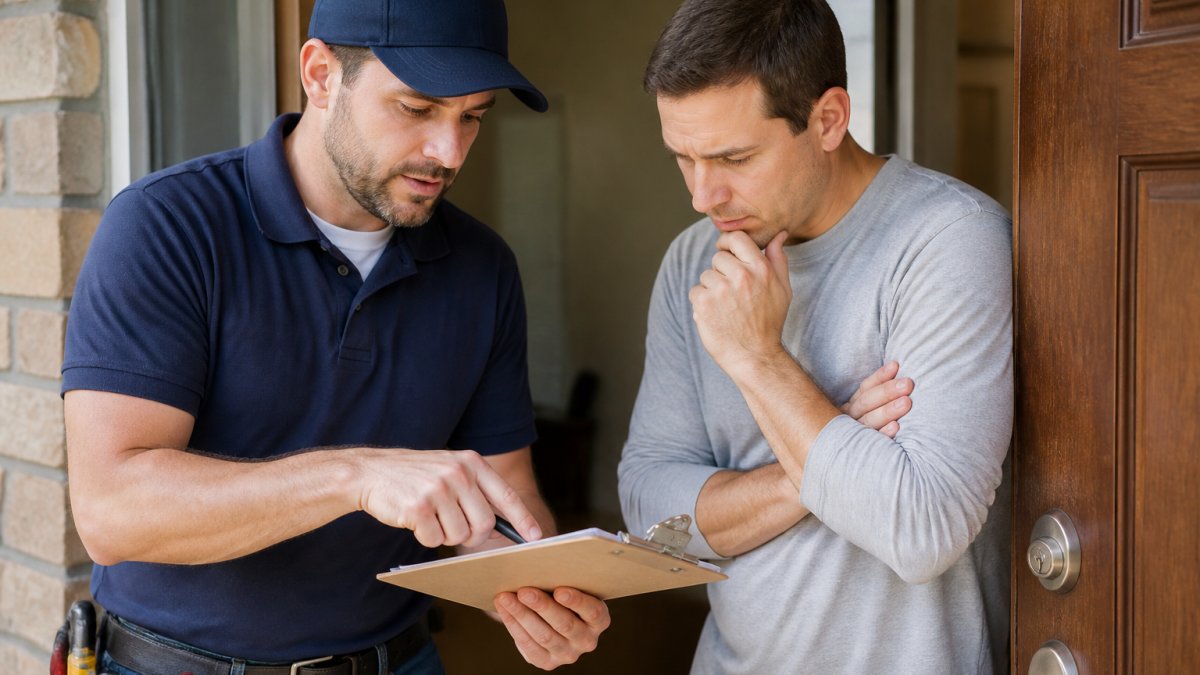
You got a $120 quote. The technician arrives, inspects the lock, and suddenly says it's $280. Here's how to handle it without getting taken advantage of.
Step 1: Pause the work
Before any tool touches the lock, say clearly: "Please stop and explain the new price before you continue." A legitimate technician will pause. If they refuse or pressure you to proceed, treat that as a serious red flag and consider declining service.
Step 2: Ask for a detailed, itemized explanation
"The lock is more damaged than I thought" is vague. "The cylinder is broken and needs replacement, not just rekeying, which adds $150 in parts" is specific. Ask the technician to walk through each new line item against the original quote and name exactly what changed.
Step 3: Request a revised written quote
Don't proceed on a verbal number. Ask for the revised total in writing, with each component priced, and compare it line by line to the original estimate. If the original was a firm quote, ask whether the locksmith intends to honor it; if it was an estimate subject to inspection, ask which finding triggered the increase.
Step 4: Decide, approve, negotiate, or decline
- Approve if the explanation is specific, the new line items are reasonable, and you have the revised quote in writing.
- Negotiate by asking for alternatives: Can the lock be repaired instead of replaced? Is there a cheaper part that still meets your security needs? Can a simpler fix get you through the night?
- Decline if the jump is unexplained, the technician won't put it in writing, or you feel pressured. You can ask the technician to leave and call another locksmith for a second opinion. That costs time, but it's your right, and a price increase you never authorized is not a bill you have to accept.
Step 5: Document everything
If you believe you were overcharged, capture the record while it's fresh:
- Take photos of the lock before and after work.
- Keep every written estimate, text message, and the final invoice.
- Note the technician's name, arrival time, and the company's phone number.
- Save call logs and any voicemail or recorded quote.
Step 6: Protect yourself at payment
Pay by credit card when possible, card payments give you a chargeback route if the final charge doesn't match the authorized amount. Ask for an itemized receipt, not just a total. If the locksmith demands cash only and refuses a receipt, that's a red flag; document it and consider reporting it.
Step 7: Know where to complain
Consumer protection for service calls varies by state and locality. Check whether your state or city requires locksmith licensing, and look up the licensing board or consumer protection office that handles complaints. If you suspect bait-and-switch pricing, file a complaint with your state attorney general's office and, where applicable, the local licensing authority. Keep documentation ready, complaints move faster with dates, quotes, and receipts attached.
Building a Relationship With a Trusted Local Locksmith
The best defense against hidden fees is a relationship with a locksmith you trust.
Finding a trusted locksmith takes time, but it's worth it. Start now, before an emergency.
Ask for references. Call previous customers and ask: Did the price match the quote? Was the work done right?
Check licensing and insurance. Licensed locksmiths are trained and held to standards. Insurance protects you if something goes wrong.
Get a written agreement. Even for routine work, ask for a written estimate and agreement.
Build the relationship before you need it. If you might need a locksmith soon, call one now for a consultation.
Ask about their pricing structure. A transparent locksmith explains how they charge.
The best way to avoid locksmith hidden fees starts with asking the right questions before you book. When you work with A-1 Locksmith, you get transparent pricing, licensed and insured technicians, and a commitment to getting the job done right the first time. Contact A-1 Locksmith for a transparent estimate and experience the difference that 50+ years of local service brings to your security needs.
Frequently Asked Questions
What should I ask a locksmith before they come out?
Ask whether the quote is firm or an estimate, what the call-out fee covers, what specific parts or labor are included, whether travel charges apply, what could trigger additional fees, and request a written quote before work begins. Confirm the technician's estimated arrival time and ask if they can provide identification and proof of licensing and insurance when they arrive. These questions help you avoid locksmith hidden fees and understand the full scope of the job.
How can I tell if a locksmith quote includes all fees?
Request an itemized quote that breaks down labor, parts, service call fees, and any travel or after-hours charges. Ask explicitly whether the quoted price is the final price or if additional charges could apply after inspection. Confirm that parts are included in the quote and not billed separately. A transparent locksmith will provide this detail in writing before work begins, reducing the risk of surprise charges.
What should I do if a locksmith changes the price after arriving?
Ask the technician to explain the price increase in detail and request an updated written estimate before they proceed. You have the right to refuse service if the new price is significantly higher than the original quote. Document the original quote and the new price, and ask for this explanation in writing. If you believe this is overcharging, you can contact your state's consumer protection agency or file a complaint with the Better Business Bureau.
Why are locksmiths expensive, and how do I know if I'm being overcharged?
Legitimate locksmith costs reflect labor, specialized equipment, licensing, insurance, and emergency availability. To avoid overpaying, compare quotes from multiple local locksmiths before an emergency, research their reviews and credentials, and ask for pricing transparency upfront. Red flags include refusal to quote over the phone, pressure to pay in cash only, vague pricing, and quoting significantly higher than other local providers. A trusted locksmith will explain their pricing and stand behind a written estimate.