 How-to
What to Do When Your House Key Snaps Off in the Lock
Last Updated: November 15, 2026
Quick Summary
When a house key snaps off inside the lock, stop turning and stop wiggling immediately, then let go of the key stub and keep the cylinder still. If a quarter inch or more of the blade protrudes, grip it with needle-nose pliers or your fingernails and pull straight back without twisting. If the fragment is flush, deep, or the cylinder is half turned, call a professional locksmith.
- Spray graphite or silicone lubricant into the keyway and wait a minute before pulling.
- Never dig with a paper clip or bobby pin, which can bend and jam inside the keyway.
- A half-turned cylinder clamps the broken blade, so pliers alone will not win that fight.
- Skip super glue, drilling, and harsh chemicals, which can ruin the lock mechanism.
- After extraction, test a spare key through a full cycle with the door open before you pay.
Table of Contents
- First Steps When a Key Snaps Off Inside the Lock
- How to Get a Broken Key Out of a Lock Without Tools
- How to Remove a Broken Key From a Door Lock With Pliers
- Key Stuck in Lock Half Turned: How to Fix It
- Methods to Avoid and Why They Make It Worse
- Broken Key in Door Lock Cost: What to Expect
- Get Professional Help From A-1 Locksmith
- Frequently Asked Questions
First Steps When a Key Snaps Off Inside the Lock
It happens in a second. You turn the key, feel a soft snap, and suddenly you are holding a broken piece of metal while the rest stays jammed in the door. Knowing what to do if your house key snaps off inside the lock starts with one rule: stop turning and stop wiggling.
Here is the calm sequence:
- Let go of the key. Do not twist the stub in the lock.
- Look before you touch. See how much of the key blade is sticking out.
- Keep the cylinder still. Do not turn the knob or deadbolt.
- Grab a light. A phone flashlight shows you the keyway clearly.
The position of the broken piece decides your next move. A protruding fragment gives you something to grip. A flush fragment sits even with the face of the lock. A deeply lodged key disappears inside the cylinder.
If the door is locked and you are stuck outside, skip the DIY steps and get inside access first. Call for help rather than fighting the lock on a closed door.
How to Get a Broken Key Out of a Lock Without Tools
You can often get a broken key out of a lock without tools if enough of the key blade is still showing. The trick is patience, not force. The Consumer Product Safety Commission reminds homeowners that small metal fragments and hand tools cause avoidable injuries, so work slowly and keep your fingers clear.
Try these no-tool methods in order:
- Fingernail grip. If a quarter inch or more sticks out, pinch the protruding fragment and pull straight back. Never twist.
- Lubricant first. Spray a little graphite or silicone lubricant into the keyway. Wait a minute. A stuck key slides out easier when the lock mechanism is slick.
- Tap gently. Lightly tap the lock housing with the handle of a screwdriver. Vibration can loosen a key fragment that is binding.
- Thin blade. Slide a coping saw blade or a thin blade beside the fragment to catch its teeth and ease it out.
A common mistake is digging with a paper clip or a bobby pin. Those bend and jam, and now you have two problems inside the keyway. Watch out: poking a thin object deep into the cylinder can push the fragment further in and damage the pins.
If nothing moves after a few gentle tries, stop. Forcing it is how a simple extraction turns into a cylinder replacement.
How to Remove a Broken Key From a Door Lock With Pliers
For a protruding fragment, needle-nose pliers are a common choice. How to remove broken key from door lock with pliers comes down to grip and a straight pull.
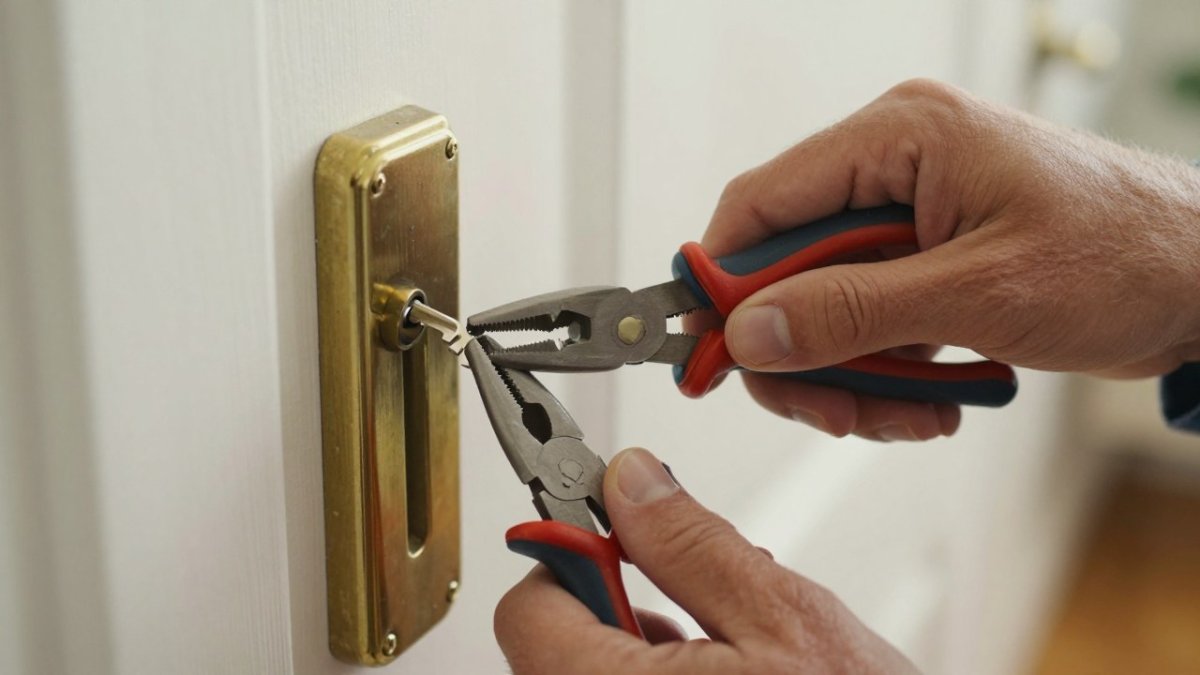
Follow these steps:
- Open the door first if you can, so you have room to work.
- Clamp the pliers on the protruding fragment with a firm, even grip.
- Pull straight back, slowly, with steady pressure.
- Pause if it catches, then try again with a touch of lubricant.
Tweezers work for a small stub that pliers cannot reach. They give you fine control near the keyway opening. The downside is a weak grip, so they slip on smooth metal.
What most guides miss is the cylinder position. If the key snapped while the lock was half turned, the pins are holding the fragment tight.
Key Stuck in Lock Half Turned: How to Fix It
A key stuck in lock half turned how to fix question has one honest answer: this is the hardest case, and it is the one most likely to need a pro.
Here is what is actually happening inside the lock.
Work through this sequence, and stop at the first sign of resistance:
- Confirm the cylinder position. Look at the keyway slot. If it is vertical, the cylinder is centered and you are dealing with a normal extraction. If it is rotated even slightly, treat it as a half-turned case.
- Try to return the plug to center without force. If any part of the key blade is exposed, insert a small flathead screwdriver into the keyway slot and apply light, steady pressure in the direction that would center the plug. Do not lever against the pins. If it will not move with fingertip pressure, stop.
- Lubricate and wait a full minute. A graphite or silicone spray gives the pins a chance to release their grip. Do not follow lubricant with aggressive wiggling.
- Use a broken-key extractor, not pliers. These thin, hooked tools are designed to catch the milling grooves on the side of a key blade and slide it out along the keyway. Pliers cannot reach a fragment that is flush or rotated.
- Reassess after each attempt. If the fragment has not moved after two gentle extractor tries, the cylinder is likely going to need professional attention.
Watch out: turning the plug further in either direction with a screwdriver can shear the driver pins and turn a broken-key call into a full cylinder replacement.
If the door is locked and the cylinder is turned, you may be locked out with a broken key inside. Do not climb or force the door. That is the moment to call a mobile locksmith.
Methods to Avoid and Why They Make It Worse
Some popular internet tricks cause more harm than good. Skip all of these:
- Super glue on a stick. The glue can bond to the pins and ruin the lock mechanism.
- Drilling. You will destroy the cylinder and possibly the door.
- Pushing with a screwdriver. A small flathead screwdriver can help align a cylinder, but shoving it in drives the fragment deeper.
- Turning the stub with pliers. Twisting a broken key blade snaps it again and scratches the keyway.
- Harsh chemicals. Solvents can gum up the pins and strip the finish.
The real difference between a five-minute fix and a full cylinder replacement is force. Gentle wins. Force loses.
Broken Key in Door Lock Cost: What to Expect
Broken key in door lock cost depends on the lock type, the fragment position, and whether the cylinder needs replacing.
The three job tiers.
- Simple extraction, door open, fragment protruding. This is the smallest job. A technician grips the fragment with needle-nose pliers or an extractor and pulls it straight out. Expect the lowest service-call tier, often quoted as a flat trip fee plus a short labor charge.
- Flush or deep fragment, door open. The technician may need an extractor, lubricant, and more time. The price steps up because the job is slower and the risk of damaging the cylinder is higher.
- Half-turned cylinder or locked door. This is the top tier. The plug must be re-centered, the fragment extracted, and the cylinder tested. If pins are damaged, replacement and rekeying are added.
What actually moves the price.
- Time of day. After-hours, weekend, and holiday calls carry a premium. A weekday morning extraction is the cheapest window.
- Lock type. A standard residential deadbolt is straightforward. A high-security cylinder or a smart lock with a restricted keyway can take longer and may require manufacturer-specific tools.
- Cylinder condition. If the fragment scratched the keyway or bent a pin, extraction alone will not restore smooth operation. Replacement cylinders are a separate part cost, and rekeying is a separate labor line.
- Access. A door that opens inward gives the technician room to work. A storm door, a tight vestibule, or a lock set behind a screen door adds time.
Questions that separate a firm quote from a surprise bill.
- Is the service-call fee flat, or does it start the moment the technician leaves the shop?
- Is the extraction quote firm before work begins, and what triggers an upcharge?
- If the cylinder must be replaced, is the part price quoted separately from labor?
- Is rekeying included or billed per cylinder?
- Is there a written estimate, and does the technician honor it if the job takes longer than expected?
We keep pricing clear and transparent, and we quote before we start. To see how to avoid surprise charges, read our guide on how to avoid locksmith hidden fees. A locksmith should diagnose the lock and explain the options. No pressure, no mystery charges.
After the extraction: test before you pay.
Once the fragment is out, insert a spare key and turn the lock through a full cycle, both directions, with the door open. It should move smoothly with no catch or gritty feel.
Here is how the job tiers break down and what drives the price.
| Job tier | Situation | What it involves |
|---|---|---|
| Simple extraction | Door open, fragment protruding | Grip with needle-nose pliers or extractor, pull straight out |
| Flush or deep fragment | Door open | Extractor, lubricant, and more time |
| Half-turned cylinder or locked door | Top tier | Re-center plug, extract fragment, test cylinder |
| Price factor | Time of day | After-hours, weekend, and holiday calls carry a premium |
| Price factor | Lock type | High-security cylinder or smart lock may need manufacturer-specific tools |
| Price factor | Cylinder condition | Replacement cylinders and rekeying are separate costs |
| Price factor | Access | Storm door, tight vestibule, or screen door adds time |
Get Professional Help From A-1 Locksmith
Some jobs are not worth a DIY gamble. If the fragment is flush or deep inside the cylinder, if the door is locked, or if the key broke half turned, call a pro.
You can review our full range of services or contact us to get help today. Homeowners nearby can check our residential locksmith services in Huntsville, and if you are deciding whether to call, see our emergency locksmith response time expectations.
A snapped key is stressful, but it is a problem we solve every week. Our team responds fast, protects your door during service, and diagnoses any security weakness we find. Get started with A-1 Locksmith and get your door working again the right way.
Frequently Asked Questions
Can you remove a broken key from a lock without tools?
Sometimes, if a small piece of the key is protruding from the keyway, you can grip it with your fingers or use a thin, sturdy object like a stiff wire or paperclip to hook and pull it out. However, this only works when there is enough of the key exposed to grab. If the fragment is flush with or deep inside the cylinder, attempting removal without proper tools can push it further in and cause damage. In those cases, a locksmith is your safest option.
How do you get a broken key out of a lock with pliers?
Use needle-nose pliers with a fine tip. First, spray a small amount of graphite or silicone lubricant into the keyway to reduce friction. Open the pliers and carefully insert the tips on either side of the protruding key fragment. Grip the fragment firmly but gently, then pull straight out without twisting or turning. If the key is flush with the lock face, pliers won't work. Stop if you feel resistance and call a professional.
How much does it cost to remove a broken key from a lock?
The cost to remove a broken key depends on the lock type, how deep the fragment is lodged, and whether the lock needs to be replaced. A simple extraction during a standard service call is usually the least expensive scenario. If the cylinder is damaged or the key broke while the door was locked, costs rise. Contact us for a quote specific to your situation.
Should you use hot glue to remove a broken key?
Hot glue is a popular internet suggestion, but it rarely works and can make things worse. The glue often fails to bond securely to the metal key fragment, and if it breaks off inside the keyway, you now have two problems. Glue residue can also gum up the lock mechanism, requiring a full cylinder replacement. Stick to tried methods like pliers or a broken-key extractor, and call a locksmith if those fail.