 How-to
7 Steps to Find a Reputable Locksmith You Can Trust
Last Updated: November 1, 2026
Quick Summary
To find a reputable locksmith, verify the license number through your state's official licensing board, not just the company's website. Then confirm insurance with a certificate of insurance, read reviews across several sites, and get a written estimate before any work starts.
- Verify the license with the state regulator, not a number printed on a website or sign.
- Ask for a certificate of insurance and confirm the policy is current.
- Check the license status and expiration date before booking.
- Get a written estimate covering service fees, labor, parts and after-hours charges before work begins.
- Ask the technician for company ID when they arrive and confirm it matches the dispatch record.
Table of Contents
- Why Vetting a Locksmith Before You Call Matters
- Step 1: Check Licensing and Insurance Before Booking
- Step 2: Read Reviews and Verify the Business Address
- Step 3: Ask the Right Questions During the First Call
- Step 4: Get a Written Cost Estimate Before Work Starts
- Step 5: Spot Warning Signs of a Locksmith Scam
- Booking Your Next Locksmith Service with A-1 Locksmith
- Frequently Asked Questions
Why Vetting a Locksmith Before You Call Matters
Locked out of your house or car? A rushed call can cost you. Many people pick the first locksmith that answers, then get hit with a bill far higher than the quote they heard. A little checking up front helps you avoid that.
This guide from A-1 Locksmith walks you through seven steps to find a reputable locksmith you can trust.
Scammers often advertise fake local numbers and quote low prices over the phone. Then they add fees on arrival. Vetting a locksmith before you call keeps you in control. It also helps you get a fair price and quick help when you need it most.
Step 1: Check Licensing and Insurance Before Booking
Licensing rules for locksmiths are set at the state and local level, and they vary widely. That patchwork is exactly why you should verify credentials yourself rather than assume a company is legitimate because it advertises.
Confirm the license through the official regulator
Ask the company for its license number and the name of the agency that issued it. Then verify it independently, do not rely on a number printed on a website or a magnetic sign. Many state licensing boards publish an online lookup where you can search by business name or license number to check a license's status.
- Find your state's regulator. Search your state government's website for the board that oversees locksmiths, private security, or alarm contractors. Many states house this under a department of licensing, professional regulation, or consumer affairs.
- Search the license number. Confirm the name on the license matches the business you are calling, not a parent company or an unrelated trade name.
- Check the status and expiration date. An expired or suspended license is a stop sign.
Verify insurance, not just a claim of it
A licensed locksmith should also carry general liability insurance and, where required, workers' compensation coverage. Ask for a certificate of insurance (COI) and confirm the policy is current. If a dispatcher dodges the request or says insurance is 'handled internally,' treat that as a warning sign.
Match the technician to the company
When the technician arrives, ask to see a company ID and confirm the name matches the dispatch record. A reputable locksmith will not object. If the person cannot produce identification or arrives in an unmarked vehicle with no company branding, pause before letting them start work.
Before you book, check these credentials yourself. Here is what to verify and where to look.
| What to check | Where or how | Red flag |
|---|---|---|
| License number | Ask the company, then verify it with the state regulator | Number only on the website or sign |
| License status | Check the status and expiration date | Expired or suspended |
| Insurance | Ask for a certificate of insurance (COI) | Dispatcher refuses or says it is handled internally |
| Technician ID | Ask to see company ID when they arrive | No ID or unmarked vehicle |
Step 2: Read Reviews and Verify the Business Address
Online reviews show how a company treats real customers. Look at ratings on several sites, not just one. Pay attention to repeated complaints about surprise fees, long wait times, or unfinished work.
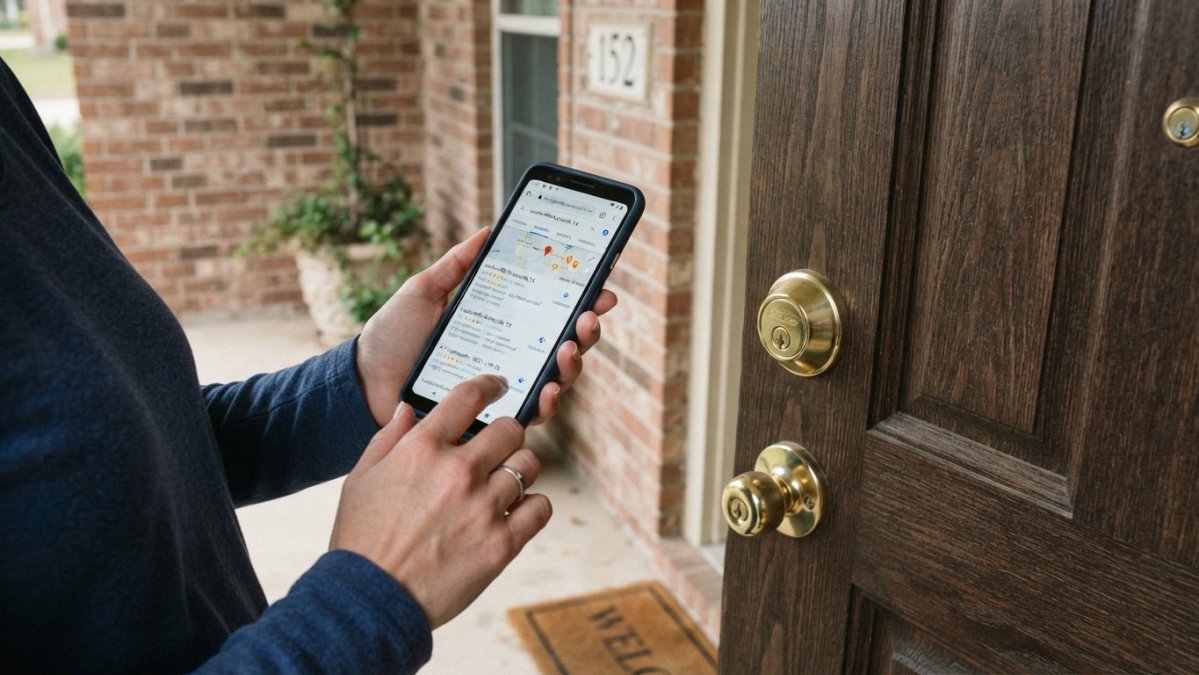
Next, confirm the business address. A real company lists a physical location. If the address only shows a mailbox or a distant city, be careful.
- Search the business name with words like "reviews" or "complaints."
- Check that the phone number matches the company website.
- Look for a street address you can find on a map.
A mobile locksmith may not have a storefront, but it should still list a service area and a real phone number.
Step 3: Ask the Right Questions During the First Call
Your first call tells you a lot. A good locksmith answers clearly and does not rush you into a decision.
Ask these questions:
- What is your company name and license number?
- Are your technicians insured?
- How long until a technician arrives?
- What is your service call fee?
- Will you give me a written estimate before starting work?
- Do you charge extra for nights, weekends, or holidays?
Write down the answers. If the person avoids a question or gets pushy, consider calling another company.
Step 4: Get a Written Cost Estimate Before Work Starts
A verbal quote can change once the technician arrives. A written estimate protects you from surprise charges. Ask for it before any work begins.
A solid written estimate should include:
- The service call or trip charge
- The labor cost
- Parts and hardware costs
- Any after-hours or emergency fees
- Payment methods accepted
Review the estimate carefully. If the final price does not match, ask the technician to explain each line before you agree. You can also ask for an itemized invoice after the job is done.
Step 5: Spot Warning Signs of a Locksmith Scam
Locksmith scams follow recognizable patterns. The most common is the bait-and-switch quote: a very low price quoted over the phone, then a much higher bill once the technician is at your door and you have no realistic alternative. Knowing the tactics in advance lets you shut them down before money changes hands.
Red flags to watch for
- A phone quote far below the local going rate, with no explanation of what it includes
- A vague or frequently changing company name, or a name that does not match the license
- No written estimate offered before work begins
- Pressure to pay in cash only, or refusal to accept a card
- A technician with no ID, no company vehicle markings, or no uniform
- A price that jumps after arrival with vague justifications ('that was the base rate,' 'your lock was a special type')
- Being rushed to approve work before you have seen an itemized breakdown
What to do if the quote changes
If the technician quotes a higher price than you were told on the phone, stop and ask for the difference in writing. You are not obligated to approve work you did not agree to. A few practical steps:
- Ask for an itemized written estimate showing the service call fee, labor, parts, and any after-hours charge. Compare it to what you were quoted.
- Do not sign anything you have not read. Some work orders include fine print authorizing additional charges.
- Document everything. Save the original quote (text, email, or a written note with the dispatcher's name and time), photos of the work, and the final invoice.
- Pay by card when possible. A card payment creates a record and gives you dispute rights that cash does not.
- Refuse to pay for unapproved work. If the technician performed work you did not authorize, say so clearly and ask for a corrected invoice.
Where to report a suspected scam
Consumer-protection channels vary by state, but the same set of options usually applies:
- Your state attorney general's consumer protection division, many accept online complaints about deceptive pricing.
- Your state licensing board, if the company claims a license, the board can investigate; if it has none, the board can confirm that.
- The Better Business Bureau, useful for a public record, though it is not a regulator.
- Your local consumer affairs office, many cities and counties run their own complaint lines.
- The Federal Trade Commission, for patterns of deceptive practices that cross state lines.
Keep copies of your quote, invoice, and any messages. A complaint is far more effective when it includes dates, names, and the specific price change.
Booking Your Next Locksmith Service with A-1 Locksmith
Serving Huntsville since 1970, A-1 Locksmith provides automotive, residential, and vault security services. Our technicians are licensed and insured, and we offer 24/7 emergency service. You can review our service options before you call, then contact our team to schedule a visit with a clear written estimate.
If you are still deciding between local and online locksmith options, read our guide on local vs online locksmith services first. For a broader look at trusted providers, see our best local locksmith services 2026 roundup.
Frequently Asked Questions
How do I know if a locksmith is reputable?
Start by confirming the business has a physical address, a local phone number and a clear company name on its vehicles and website. Check that the technician is identified by name and carries identification. Look for consistent reviews across several platforms rather than a handful of recent five-star ratings. Ask whether the company is licensed and insured, and request proof. A reputable locksmith will answer these questions directly and without pressure.
What should I ask a locksmith before hiring them?
Ask for the company's name, business address and license details before you agree to anything. Ask whether the quoted price includes the service call fee, labor and any parts, and whether after-hours or trip charges apply. Confirm the expected arrival time and whether the technician is employed by the company or subcontracted. Ask how they will document the work, such as with an itemized invoice. Clear answers to these questions are a strong sign of a trustworthy provider.
Should a locksmith give me an estimate before starting work?
Yes. A reputable locksmith should give you a written or clearly stated estimate before beginning work, including the service call fee and the expected labor cost. If the quote changes, the technician should explain why and get your approval before continuing. Ask for an itemized invoice when the job is finished. A vague verbal quote that rises sharply on arrival is one of the most common warning signs of a locksmith scam.
How can I verify a locksmith's license and insurance?
Ask the company for its licensing information and proof of general liability insurance, then confirm it through the appropriate state licensing authority. Check the license status and expiration date through the appropriate state licensing authority. Keep in mind that insurance certificates should name the business, not just an individual technician. If a company cannot provide either document, consider booking with a different provider.
Get in touch with A-1 Locksmith today for fast, transparent service you can count on.