 How-to
7 Steps to Secure Rural Property Gate Locks
Last Updated: October 25, 2026
Quick Summary
To secure rural property gate locks, assess your gate for weak points like rust and loose hinges, choose the right lock type for your access needs, and reinforce the frame and posts with carriage bolts rather than screws. Match your padlock shackle diameter to your gate construction, use stainless steel or hardened steel hardware, and maintain the lock monthly with dry lubricant and seasonal inspections.
- Use a 3/8-inch hardened shackle as the practical minimum for a drive gate padlock.
- Mid-range hardened stainless or shrouded-shackle padlocks at $25-$60 offer the practical sweet spot for most rural gates.
- Install hinges with carriage bolts and washers, using at least three hinges for larger gates to prevent the gate from lifting off.
- Apply lock-specific graphite or PTFE-based lubricant before winter, not general-purpose oil which attracts dust and gums up in cold weather.
- Add a second padlock on the opposite side of the gate or install a keyed latch in addition to your main lock for increased security.
Table of Contents
- Assess Your Gate and Identify Weak Points
- Choose the Best Outdoor Gate Locks for Your Setup
- Select a Gate Padlock for Outdoor Use
- Reinforce the Gate Frame, Posts, and Hinges
- Install Your Gate Lock Correctly
- Maintain Your Gate Lock and Hardware
- Add Secondary Locks and Tamper-Resistant Hardware
- Schedule a Professional Security Assessment
- Frequently Asked Questions
Assess Your Gate and Identify Weak Points
Examine your gate for rust, bent metal, loose hinges, and worn hardware, the entry points thieves exploit when secure rural property gate locks are absent or poorly maintained.
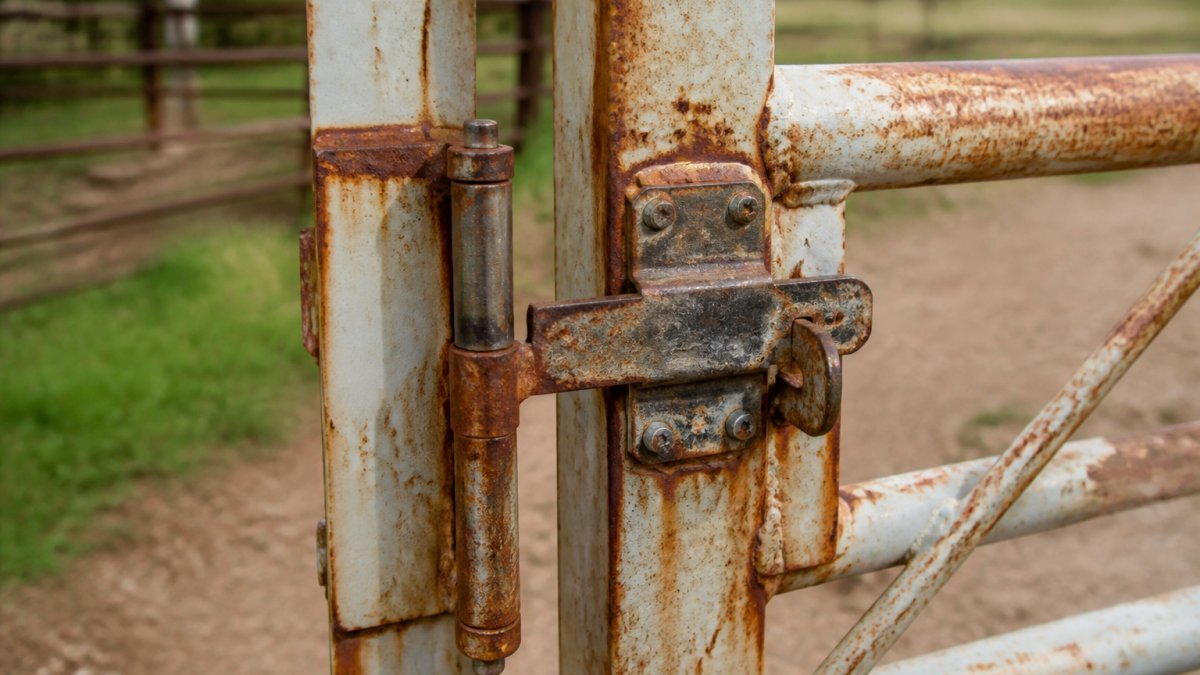
Walk around both sides and push hard on the frame.
Exposed hinge pins let someone lift the gate off entirely. Rotted wooden posts and thin or corroded chains fail easily.
Photograph what you find so you buy the right locks and reinforcement hardware instead of wasting money on the wrong solution.
Choose the Best Outdoor Gate Locks for Your Setup
Your lock choice depends on gate type, access frequency, and what you're protecting.
Three main categories suit outdoor use:
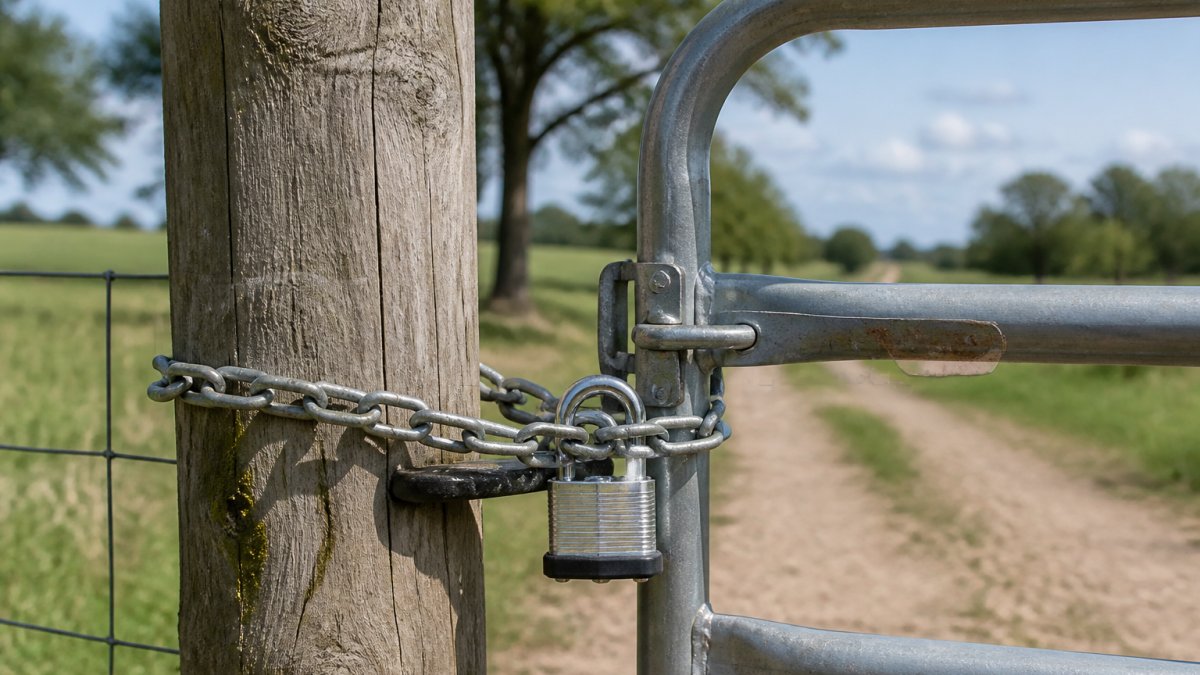
Padlocks are affordable and simple, working with chains or hasps. Buy an outdoor-rated stainless steel or zinc-plated model that resists rust; heavy-duty versions cost more but last longer in rain and snow.
Keyed latches mount directly on the gate and are faster than padlocks for regular access.
Combination locks eliminate keys and suit multiple users. Outdoor versions resist weather better than indoor ones, but combinations can be guessed or observed.
Daily access favors a keyed latch, occasional access a padlock, and multiple users a combination lock.
Select a Gate Padlock for Outdoor Use
Secure rural property gate locks are only as good as the gate they hang on and how they're mounted. Match the lock to your gate construction, opening frequency, and who needs access, the decision most rural owners get wrong.
Match the padlock to your gate type
Chain-link gates. The chain or hasp is usually the weak point, not the lock.
Tube and steel farm gates. These often have a built-in latch with a hole for a padlock.
Frequent vehicle access. For daily opening, consider a keyed latch or electric gate opener with keypad backup.
Shared access. A four-dial resettable combination padlock avoids cutting keys for neighbors, workers, or contractors; change the code when a worker leaves.
Features that actually matter outdoors
- Shackle material and diameter. Hardened steel resists bolt cutters; a 3/8-inch shackle is a reasonable minimum for a drive gate, 5/16-inch for a walk gate.
- Body material. Stainless steel or a zinc-plated hardened steel body. Avoid painted brass or pot-metal bodies, which pit and seize.
- Sealed or shrouded shackle. A shrouded shackle (sometimes called a closed shackle) leaves almost no exposed metal for a cutter.
Mounting matters as much as the lock
A padlock on a loose chain is easy to attack with a pry bar or jack. Bolt the hasp or chain through the frame with carriage bolts, not screws or nails, and keep the lock body tight against the hasp with no gap for a cutter. On chain-link gates, a short length of hardened chain bolted to the frame beats locking through the mesh.
What to spend
A basic outdoor padlock runs $10-$25 and fails within a season or two. A mid-range hardened stainless or shrouded-shackle padlock at roughly $25-$60 is the practical sweet spot for most rural gates.
A cheap padlock on a strong gate is a false economy; an expensive padlock on a weak hasp is the same.
Padlock prices and performance vary widely; here's where the practical value lies for most rural gates.
| Price Range | Lock Type | Best For | Durability |
|---|---|---|---|
| $10-$25 | Basic outdoor padlock | Temporary use | Fails within a season or two |
| $25-$60 | Mid-range hardened stainless or shrouded-shackle | Most rural gates | Practical sweet spot |
| $60-$150+ | High-security models | High-value equipment or livestock | Only when gate is equally reinforced |
Reinforce the Gate Frame, Posts, and Hinges
A strong lock on a weak gate is a vault door on a cardboard wall. Reinforce the structure itself.
Gate frame strengthening:
- Check that the frame is square. A twisted frame won't close properly and weakens security.
- Add diagonal bracing if the frame flexes. Weld or bolt a steel rod from top corner to bottom corner.
- Replace rotted wood posts. Wood that's soft or crumbling can't hold hardware.
Hinge protection:
If hinge pins pull out, the gate lifts off.
Bolt all hinges through the frame with carriage bolts and washers. Screws aren't strong enough. Use at least three hinges for larger gates.
Post reinforcement:
Posts take the weight and stress; a weak post means the gate sags or won't close.
Install Your Gate Lock Correctly
Installation matters as much as lock choice. A good lock installed poorly fails quickly.
Before you start:
- Gather the right tools: drill, bits, wrenches, measuring tape, level
- Read the lock manufacturer's instructions
- Have someone help hold parts while you work
Installation steps:
- Position the lock at waist height on the gate. This is easier to use daily.
- Mark the mounting holes with a pencil.
- Drill pilot holes first. This prevents the metal from cracking.
- Use bolts, not screws. Bolts hold under stress. Screws strip out.
- Add washers under bolt heads and nuts. They distribute pressure and prevent sinking into soft metal.
- Tighten bolts firmly but don't over-tighten. You can crack the lock or strip threads.
- Test the lock before considering the job done. It should operate smoothly and lock securely.
Recheck after a few weeks; bolts loosen as the gate settles.
Maintain Your Gate Lock and Hardware
Rural gate hardware fails from conditions, not age. Mud, dust, freeze-thaw cycles, livestock rubbing, and disuse do more damage than rain alone; a short seasonal routine prevents most failures.
Monthly: keep it moving
- Operate the lock. Open and close it fully. A lock that sits unused for weeks is more likely to seize than one used daily.
- Wipe and dry. Remove mud and grit from the shackle and keyway with a dry cloth. Don't spray water into the keyway.
- Check the mounting. Wiggle the hasp, chain, and bolts. Loose hardware is the first sign of a failing gate.
Seasonal: prepare for the conditions
Before winter (freeze-thaw and ice):
- Apply a lock-specific lubricant (graphite or a PTFE-based lock lubricant) to the keyway and shackle. General-purpose oil attracts dust and gums up in cold weather.
- Check that the gate swings freely. A gate that binds in freezing weather puts stress on the latch and lock.
- Clear the swing path of debris so the gate isn't forced against snow or ice.
Before summer (dust and mud):
- Blow or brush dust out of the keyway and shackle area. In dry, dusty conditions, a dry lubricant outperforms oil.
- Inspect the gate frame for cracks or bends from winter frost heave. A heaved post twists the gate and misaligns the latch.
After heavy rain or flooding:
- Dry and relubricate the lock. Mud carried by water packs into the keyway and shackle.
- Check post footings for erosion. A washed-out footing lets the gate sag and the lock bind.
Annual: inspect and decide
Once a year, remove the lock and inspect it closely:
- Shackle: Look for deep pits, cracks, or a shackle that has worn thin where it contacts the hasp. Replace the lock if the shackle is visibly worn.
- Body: Check for cracks at the shackle holes. A cracked body can fail under force.
- Keyway or dial: Test that the key turns smoothly or the dial spins freely. A stiff mechanism is near failure.
- Hasp and chain: Look for bent links, worn bolt holes, and corrosion. Replace bent or heavily corroded chain links, a broken chain defeats the lock.
- Hinges and latch: Check hinge pins for wear and the latch for misalignment. A sagging gate misaligns the lock and accelerates wear.
Repair or replace?
- Clean and lubricate a lock that is stiff but otherwise sound. Surface rust on a shackle can be removed with a wire brush and the lock returned to service.
- Replace a lock with a pitted or cracked shackle, a cracked body, a keyway that won't free up after cleaning, or a combination dial that skips. These are failure points, not maintenance items.
- Replace hardware, not just the lock, when the hasp is bent, the chain is corroded through, or the gate frame is twisted. A new lock on failing hardware will fail with it.
A note on livestock and shared gates
Gates that livestock rub against or push on take far more wear than a drive gate. Check the latch and lock alignment monthly on pasture gates, and expect to replace latches more often than locks. If a gate is left open for long periods, lubricate and operate the lock before closing it for the season, a lock that sat open through mud season may not close again without attention.
Add Secondary Locks and Tamper-Resistant Hardware
Two or more locks make your gate much harder to breach.
Secondary lock options:
- Add a second padlock on the opposite side of the gate
- Install a keyed latch in addition to a padlock
- Use a chain lock as backup to your main lock
Multiple locks require more time and tools to defeat. A thief facing two different locks is more likely to move on.
Tamper-resistant hardware:
- Use carriage bolts with the rounded head facing outward. These can't be turned with a wrench.
- Install bolts with security nuts that can't be removed without a special tool.
- Choose hinges with non-removable pins.
These upgrades cost more but slow down or stop casual theft attempts.
Schedule a Professional Security Assessment
After your improvements, a professional assessment confirms the gate is secure and spots vulnerabilities you might miss.
At A-1 Locksmith, our licensed and insured technicians evaluate your gate, locks, hinges, posts, and access points.
We'll walk you through what we find and explain your options clearly. No pressure, no hidden fees.
Professional installation of new locks and hardware ensures the job is done right with quality materials and proper techniques, keeping your gate secure for years.
Learn more about locksmith services for rural properties to understand what's involved. You can also browse our services to see all the options we offer. Ready to move forward? Contact us for a security assessment and we'll schedule a time that works for you.
Frequently Asked Questions
What is the most secure way to secure rural property gate locks?
Layered security works best: combine a weather-resistant padlock or keyed lock with a secondary bolt, reinforce the gate frame and posts, and secure hinges with tamper-resistant hardware. Rural gates face weather exposure and isolation, so redundancy matters. A single lock can fail or be cut; multiple barriers deter unauthorized entry and provide backup access if one lock fails.
How do you choose a padlock for an outdoor gate?
Look for corrosion-resistant materials like stainless steel or hardened alloy, a shackle at least 3/8 inch thick to resist bolt cutters, and a keyless or combination design if you need to avoid lost keys. Check that the lock is rated for outdoor use and weather exposure. Test the mechanism in cold and humid conditions before installation.
How often should outdoor gate locks be inspected and maintained?
Inspect locks every 3 months and after severe weather. Lubricate moving parts with a dry silicone spray (not oil, which attracts dirt) every 6 months. Check hinges, bolts, and frame alignment seasonally. In harsh rural conditions with salt air or high humidity, inspect monthly. Replace locks showing corrosion, rust, or sticking mechanisms immediately. Preventive maintenance prevents lockouts and extends hardware life by years.
Can you secure a gate while still allowing authorized visitors to enter?
Yes. Use a combination lock so visitors can enter without a key, or install a keyless smart lock with a temporary code. A secondary keyed lock controlled only by you adds security while the combination lock grants access. Chain and padlock systems allow authorized people to unlock one side while you control the main gate lock. Consider your access frequency and visitor patterns when choosing the method.
Securing rural property gate locks takes planning and the right materials, but it's achievable. Start with a careful assessment of your gate's weak points. Choose outdoor-rated locks suited to your setup. Reinforce the frame, posts, and hinges. Install everything correctly and maintain it regularly. Add secondary locks for extra protection. When you're ready for professional help, A-1 Locksmith provides expert assessment and installation with the reliability you can trust.