 Listicle
Smart Lock Alternatives for Residential Security in 2026
Quick Summary
Strong alternatives to smart locks include high-security mechanical deadbolts, mechanical keypad locks, and door reinforcement hardware. These options avoid Wi-Fi, Bluetooth, and cloud accounts, which means fewer points of failure and no ongoing subscriptions. Choosing the right option for residential security depends on your door's condition, who needs access, and your budget.
- Check for an ANSI/BHMA Grade 1 rating when choosing a high-security deadbolt.
- A mechanical deadbolt keeps working during power outages and internet drops.
- Battery-assisted keypad deadbolts typically cost $50 to $150 and need no hub.
- Codes on keypad locks must be changed by hand at the door, not remotely.
- Reinforced strike plates with long screws help stop frame and kick-in attacks.
Table of Contents
- Why Look Beyond Smart Locks for Your Home
- High-Security Deadbolts as a Mechanical Upgrade
- Mechanical Keypad Locks for Keyless Entry Without Wi-Fi
- Door Reinforcement Hardware and Whole-Door Security
- Smart Lock Risks: Privacy, Connectivity and Hacking
- Matching a Lock Option to Your Threat Model and Budget
- Booking a Security Assessment With A-1 Locksmith
- Frequently Asked Questions
Why Look Beyond Smart Locks for Your Home
Smart locks are convenient, but they are not the only way to secure a front door, and for many Huntsville homeowners they are not the best way. A 2025 survey of 12,000 smart lock owners found that users had 58% fewer instances of accidentally leaving their home unlocked (Ring smart lock owner survey). That is a real benefit. But smart locks also depend on batteries, Wi-Fi or Bluetooth, and an app, and each of those is a point of failure.
Residential security depends on the whole door, not just the lock. A strong, correctly installed mechanical lock can meet the needs of many households at a lower cost and with fewer moving parts. This guide compares the main alternatives so you can match a lock to your actual risks and strengthen your residential security without overspending.
High-Security Deadbolts as a Mechanical Upgrade
A high-security deadbolt is the most direct alternative to a smart lock, and for many households it is the stronger one. It is a purely mechanical lock with a reinforced body, a pick- and bump-resistant cylinder, and a hardened steel bolt that resists sawing and cutting. It keeps working during a power outage, a Wi-Fi drop, or a dead phone battery, and it has no firmware to update, no account to compromise, and no cloud service that can be discontinued.
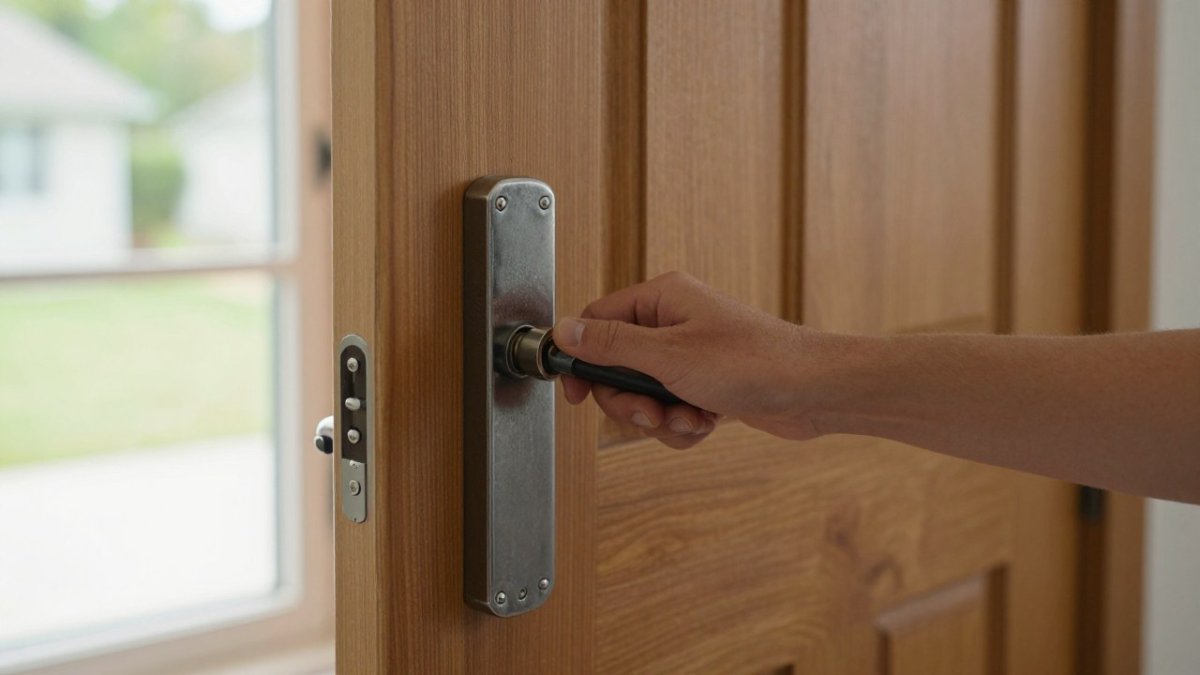
The first thing to check is the ANSI/BHMA grade stamped on the packaging. Grade 1 is generally regarded as the highest residential rating, and Grade 3 is generally the minimum rating that builder-grade locks carry.
High-security deadbolts fall into a few recognizable families. Restricted-keyway models use a patented key blank that cannot be copied at a hardware-store key machine without authorization, which limits unauthorized duplication. Pick-resistant cylinders use security pins and tighter tolerances to defeat common picking and bumping. Reinforced models add a hardened steel plate or a spinning cylinder guard that resists wrenching and drilling. Many of these locks also ship with a UL 437 rating for the cylinder, which is a higher bar than the standard residential grade.
Pricing depends on the lock model, door material and installation requirements. For a current quote, contact A-1 Locksmith directly.
A mechanical deadbolt is often the better choice when:
- Your door is solid and well framed, so the lock is not the weak point
- You want no batteries, no subscriptions, and no app to maintain
- Your household includes people who would struggle with a touchscreen or phone app
- You rent and cannot change the door hardware, or you prefer a simple, reversible upgrade
- You want a lock that still works when the power and the internet are both out
Watch out: a Grade 1 deadbolt installed in a hollow-core door or a soft pine frame will still fail under a kick, because the lock is only as strong as the material it is anchored into. Pair any high-security deadbolt with the reinforcement hardware covered below.
Mechanical Keypad Locks for Keyless Entry Without Wi-Fi
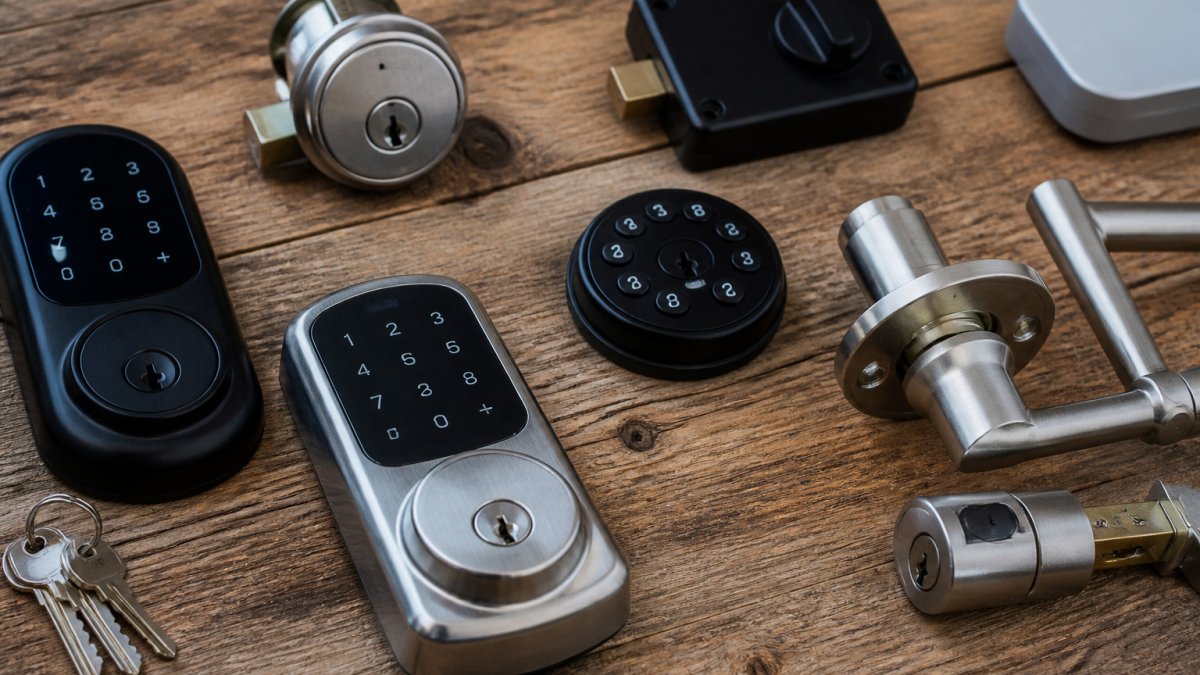
A mechanical keypad lock gives you keyless entry without a network connection, and it is the closest thing to a smart lock that still works entirely offline. You enter a code on a keypad, and the lock releases using mechanical or battery-assisted parts. There is no Bluetooth pairing, no Wi-Fi radio, and no cloud account, so there is nothing to hack remotely and no manufacturer server that knows when your door opens.
There are two main types. Fully mechanical keypad locks use a push-button sequence to align internal tumblers and require no battery at all; they are common on garages, gates, and utility doors. Battery-assisted keypad deadbolts use a keypad to trigger a small motor or solenoid and are the more common choice for a front door. Battery-assisted models are powered by batteries that need periodic replacement, and most include a key override as backup.
The trade-off is management. Codes must be changed by hand at the lock, and you cannot see an activity log or grant temporary access from your phone. On most models you can program multiple user codes and a one-time guest code, but you have to be physically at the door to do it. That is a real limitation for a rental with frequent turnover, and it is exactly why some owners pair a keypad deadbolt with a simple lockbox for contractor access.
Expect to pay roughly $50 to $150 for a battery-assisted keypad deadbolt and $30 to $90 for a fully mechanical keypad lock. Installation is comparable to a standard deadbolt and usually runs $75 to $150 professionally. There are no subscriptions and no hub, so the ongoing cost is limited to batteries every year or two.
Keypad locks work well for a family, a rental property, or a ranch outbuilding where several people need access without carrying keys. They are also a good fit for older adults and people with limited dexterity, because a large-button keypad with a backlit display is easier to operate than a phone app, and there is no password to remember for a cloud account.
Watch out: a mechanical keypad with visible wear on certain buttons can reveal your code to an observant neighbor, so choose a model with randomized or scrambled keypad layout, or change codes periodically.
Door Reinforcement Hardware and Whole-Door Security
Many break-ins happen through the door frame, not the lock. A determined intruder can kick the door near the strike plate and split the wood, and the best lock will not stop that. Reinforcement hardware addresses this directly.
Common upgrades include:
- Reinforced strike plates with long screws that anchor into the framing
- Door reinforcement kits that add metal plates around the lock area
- Longer deadbolt throws that reach deeper into the frame
- Solid core or metal doors in place of hollow doors
Reinforcement is one of the lowest-cost ways to improve security, and it works with any lock you choose. Because it adds no electronics, it has no ongoing cost.
Smart Lock Risks: Privacy, Connectivity and Hacking
Smart locks carry real trade-offs that are easy to overlook at checkout. Connected locks send data to a manufacturer's servers, and that raises privacy questions about who can see when your door opens. Security researchers have also analyzed smart lock designs and found weaknesses in how some devices communicate (Michigan State University security analysis of the August smart lock). For a closer look at whether your door and platform can safely take a smart lock, see smart lock compatibility checks for homes.
A smart lock also needs a working connection to be fully useful. A dead battery, a Wi-Fi outage or a bad Bluetooth pairing can leave you locked out or unable to grant access. Check the lock's manual mode and keep a physical key or backup code in a safe place.
Smart locks can also be the right choice. They are convenient for guests, contractors and families, and they add an activity log. The key is to decide with these risks in view.
Matching a Lock Option to Your Threat Model and Budget
Start with the question: what are you protecting against? A renter worried about a forgotten key needs something different from a rural owner securing a barn full of equipment.
| Option | Best for | Power or network needed | Ongoing cost |
|---|---|---|---|
| High-security deadbolt | Strong, simple everyday security | None | None |
| Mechanical keypad lock | Keyless entry for families and rentals | Batteries only | Battery replacement |
| Reinforcement hardware | Stopping frame and kick-in attacks | None | None |
| Smart lock | Remote access and activity logs | Batteries and Wi-Fi or Bluetooth | Batteries, sometimes subscriptions |
Work through these steps:
- Check the condition of your door and frame before choosing a lock.
- Decide who needs access and whether you need to grant it remotely.
- Set a realistic budget that includes installation and future battery or subscription costs.
- Choose the simplest option that meets the first two needs.
If you are unsure, a locksmith can inspect your door and recommend a combination that fits.
Booking a Security Assessment With A-1 Locksmith
A professional assessment is the fastest way to find out which upgrade your door needs. If you decide on a smart lock, learn how to choose professional smart lock installation. A-1 Locksmith has served Huntsville since 1970, and our licensed and insured technicians can evaluate your locks, frame and strike plates, then recommend options that match your home and budget.
You can request a security assessment to get started, or review our locksmith services to see what we handle. If you want to confirm credentials before booking, check how to verify a licensed locksmith.
Get a clear picture of your door's security before you spend a dollar on hardware. Contact A-1 Locksmith today to schedule an assessment with a licensed Huntsville technician.
Frequently Asked Questions
How hackable are smart locks?
Smart locks can be attacked through their wireless connections and software, and security researchers have demonstrated weaknesses in some models. Keeping firmware updated, using strong unique passwords for the companion app, and enabling two-factor authentication where offered reduce exposure. A mechanical deadbolt has no wireless attack surface at all, which is why it is often recommended for homeowners with the highest privacy concerns.
Are traditional deadbolts more secure than smart locks?
A high-quality mechanical deadbolt rated ANSI/BHMA Grade 1 or Grade 2 offers strong physical resistance and cannot be compromised through software or Bluetooth. Smart locks add convenience features such as remote access and activity logs, but their security depends on both the hardware and the digital layer. For many homeowners, a well-installed high-security deadbolt paired with reinforced door hardware provides comparable physical protection at a lower cost. Pricing depends on the model, finish and installation requirements, so request a current quote from A-1 Locksmith before buying.
Do smart locks deter burglars?
Burglars generally target homes where entry looks easy, and the lock itself matters less than the door frame, strike plate and hinge side. A smart lock does not automatically deter a determined intruder, and a conventional lock with a reinforced strike plate can resist kicking better than a weak smart lock on a flimsy door. Combining a solid lock with door reinforcement hardware addresses the most common entry method.
What are the most reliable non-electronic door security options?
The most dependable non-electronic options are a high-security deadbolt, a mechanical keypad lock and door reinforcement hardware such as a reinforced strike plate with long screws, a door security bar or a hinge-side reinforcement kit. Mechanical keypad locks let household members enter with a code without carrying a key and need no batteries or software. Reinforcement hardware addresses the forced-entry weak points that many lock upgrades leave untouched. A-1 Locksmith can assess which combination fits your door and budget.