 How-to
How to Get Locksmith Help for a Rural Ranch Gate
Last Updated: November 2, 2026
Quick Summary
A ranch gate locksmith repairs, replaces, or rekeys gate locks that jam, sag, or corrode, and can add keyless entry for remote properties. Before you call, note the gate's condition, check the travel fee and service radius, and share exact gate coordinates so the technician arrives with the right parts.
- Choose solid brass or stainless steel hardware rated for outdoor use and the gate's weight.
- Check whether a sagging gate is the cause before calling, since latch misalignment mimics a broken lock.
- Replace a lock when its body is cracked, the cylinder is badly corroded, or repairs keep failing.
- Rekey the cylinder to change access for new workers or a lost key without replacing the whole lock.
- Keep a mechanical override on any keyless system so a dead battery cannot lock you out.
Table of Contents
- Why Ranch Gates Need Different Locksmith Service
- Choosing the Right Lock Hardware for a Ranch Gate
- Ranch Gate Lock Repair: Diagnosing a Jammed or Sagging Gate
- Gate Lock Replacement and When It Makes More Sense Than Repair
- Gate Lock Rekeying for Multiple Users
- Keyless Gate Entry Systems for Remote Properties
- Preparing for a Mobile Locksmith Visit to Your Property
- Frequently Asked Questions
A-1 Locksmith has served Huntsville, Texas since 1970, and ranch owners often call with a gate that won't open or a question about what kind of lock will hold up outside. A ranch gate is not the same job as a front door, and the difference shapes everything from the lock you pick to how you describe the problem on the phone. You can review the services we offer for rural properties before you call. This guide explains how to get locksmith help for a rural ranch gate, what to check before you call, and what to expect when a technician arrives.
Why Ranch Gates Need Different Locksmith Service
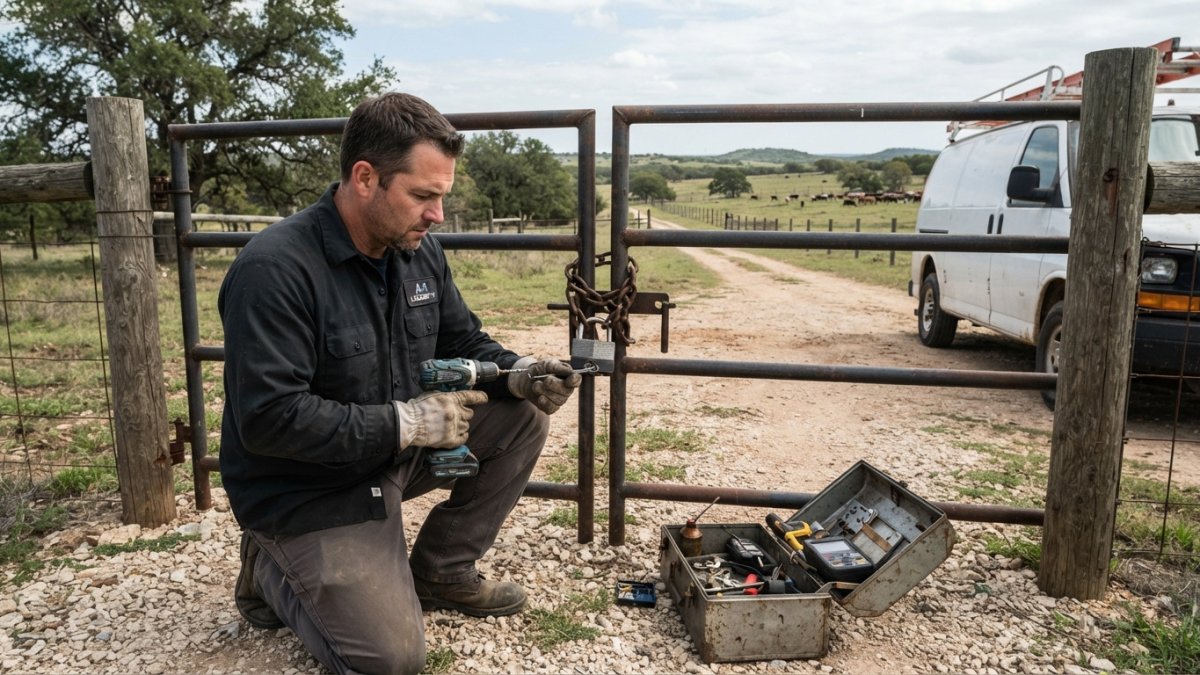
A ranch gate takes more abuse than most residential locks. It swings on long hinges, sits exposed to weather, and often gets pushed, chained, or driven into by livestock and equipment. Gate hardware also carries more load than a standard door latch.
Rural access adds its own complications. The gate may be a long drive from the nearest town, and the closest locksmith may be a much longer trip than you'd expect in a city. Ask any provider up front how far out they will go and whether a travel fee applies.
Ranch owners often need more than one kind of access. A gate may need a keyed lock for family members, a padlock for hired hands, and a code or remote for deliveries. Planning that mix before a lock fails is far cheaper than fixing it in a hurry.
Choosing the Right Lock Hardware for a Ranch Gate
Start with the environment, not the price tag. A lock that works well on a suburban gate can rust or seize within a season on a ranch that sees rain, dust, and manure.
Look for these features when you choose gate hardware:
- Weather-resistant material. Solid brass or stainless steel handles moisture far better than plated zinc.
- Heavy-duty construction. A gate lock should be rated for outdoor use and for the weight of your gate.
- A proper strike plate and latch alignment. Many failed gate locks are really alignment problems. The latch misses the strike because the post has shifted.
- Easy access in bad weather. You will reach for this lock with gloves on, in the rain, and in the dark.
A common mistake is installing an interior-style lock on an exterior gate. The cylinder fills with grit and the mechanism binds quickly. Buy hardware meant for outdoor exposure, even if it costs more up front.
The article's key hardware features for a ranch gate lock are summarized below.
| Feature | Why it matters | Avoid |
|---|---|---|
| Weather-resistant material | Solid brass or stainless steel handles moisture better than plated zinc | Plated zinc |
| Heavy-duty construction | Rated for outdoor use and the weight of your gate | Interior-style locks |
| Strike plate and latch alignment | Many failed gate locks are alignment problems | Shifted posts |
| Easy access in bad weather | You reach for it with gloves, in rain, in the dark | Hard-to-reach locks |
Ranch Gate Lock Repair: Diagnosing a Jammed or Sagging Gate
Most gate lock problems come from two causes: the gate has dropped, or the lock has worn or corroded. Figuring out which one you have tells you whether the fix is a simple adjustment or a service call.
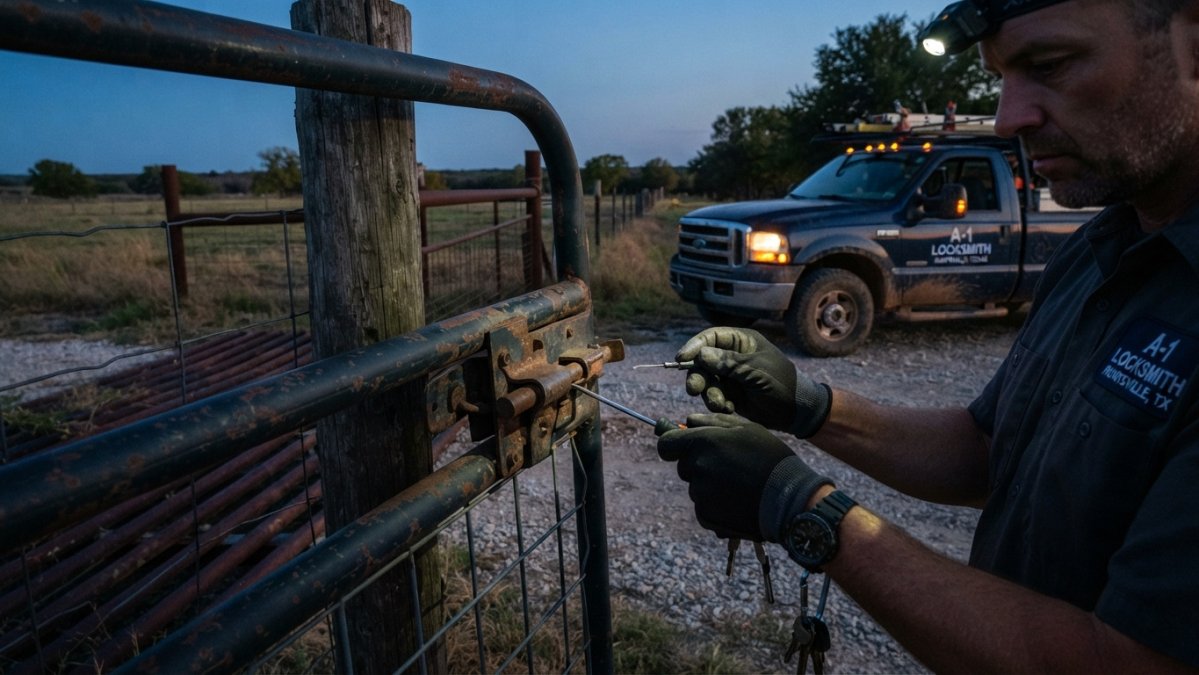
If the latch won't line up with the strike, the gate has likely sagged. Gravity pulls the hinged end down over time, and the latch ends up above or below the strike plate. If the key turns but the bolt won't throw, look inside the cylinder for dirt, rust, or a broken pin. If the key won't go in at all, the cylinder may be full of debris.
Checking a Sagging Gate Before Calling for Help
Before you call a ranch gate locksmith, do a quick inspection:
- Close the gate slowly and watch where the latch hits.
- Check whether the top or bottom of the gate rubs the ground or the post.
- Look at the hinges for cracks, bent pins, or loose bolts.
- Try opening and closing the gate with the lock disengaged to see if it binds.
Write down what you see. Telling a technician that the latch hits two inches high at the bottom of the gate helps them arrive with the right tools. It also gives you a basis for comparing quotes.
Do not force a jammed key or pry at a sagging gate. Forcing a lock can snap the key inside the cylinder, which turns a simple call into a more involved repair.
Gate Lock Replacement and When It Makes More Sense Than Repair
Repair is often enough for a lock with a worn latch or a dirty cylinder. Replacement makes more sense when the lock body is cracked, the cylinder is badly corroded, or the mechanism has been damaged by force. For a side-by-side look at rekeying versus replacing door locks, see our complete guide.
Replace the lock if repairs keep failing within a short time, if you can't find parts for an older model, or if the existing lock no longer matches the security you need. Many ranch owners also replace gate hardware when they add keyed entry for new workers, since a new lock lets you control who holds which key.
When you compare repair and replacement, ask for a written estimate that lists each step. A reputable provider will explain why a replacement is recommended rather than simply pushing the more expensive option.
Gate Lock Rekeying for Multiple Users
Rekeying changes the internal pins of an existing cylinder so that old keys stop working and new ones match. It is usually faster and less costly than replacing the whole lock. This is useful when a hired hand leaves, a key goes missing, or you want to give a new family member access without changing the lock on the gate.
Rekeying also helps when several people need access. You can keep one master key for the owner and issue separate keys to others, which makes it easier to track who has access. Ask the locksmith how many keys they will cut and whether they can set up a master-key system if your property has multiple gates or outbuildings.
Keyless Gate Entry Systems for Remote Properties
Keyless entry removes the need to carry keys across the property, but on a ranch the choice of system matters more than the brand. The three families you will see are standalone keypad locks, gate operators with integrated access control, and cellular or Wi-Fi smart locks.
Standalone keypad locks run on batteries and need no wiring or internet. They can be a simple retrofit for a swing gate with an existing mechanical latch, and they keep working when the power is out.
Gate operators with access control can suit sliding gates and heavy swing gates. These systems pair an operator with a keypad or card reader.
Cellular and Wi-Fi smart locks can let you issue temporary codes from your phone. They depend on a signal, so check connectivity at the gate itself, not at the house, and confirm the lock stores codes locally so it still opens when the connection is lost.
A few ranch-specific rules of thumb:
- Match the lock to the gate's weight and how often it opens.
- Keep a mechanical override. Every electronic system should have a keyed bypass or a manual release so you are not locked out when a battery dies.
- Plan for livestock. A gate that closes automatically needs photo eyes or loops, or a horse can be caught in the swing.
- Confirm the system is rated for outdoor use and for the temperature range you actually see, not the range on the box.
Preparing for a Mobile Locksmith Visit to Your Property
Many locksmith listings do not say how far out they will drive. On a ranch, that is the first thing to verify. Before you book, ask three questions: What is your service radius, is there a mileage or travel fee beyond it, and what is the after-hours or emergency call charge? Get the answers in writing or by text so there is no surprise on the invoice.
Ask whether the quoted price includes the service call, labor, and parts, or whether those are separate line items. A transparent provider will break them out.
Once the visit is scheduled, the information you give the dispatcher decides how fast the technician finds you and whether they arrive with the right parts. Have this ready:
- Gate coordinates, not just an address. Rural addresses often route GPS to the wrong cattle guard or to a locked easement. Drop a pin at the gate itself and text it to the dispatcher.
- Gate type and lock photos. A photo of the latch, the strike, and the cylinder tells the technician whether to bring a replacement cylinder, a latch guard, or a full lock body.
- Current state of the gate. Is it locked closed, locked open, or jammed half-shut? Is a vehicle or livestock blocked? That changes the urgency and the tools.
- Ownership or authorization. If the gate is on leased land or a shared easement, confirm you have authority to authorize the work, and have the property owner's contact ready.
- Access constraints. Note cattle guards, low branches, soft ground after rain, locked outer gates, or a dog that needs to be secured before the technician arrives.
- Available power. If the gate has an operator or a keypad, confirm whether there is a live outlet or battery bank nearby, because the technician may need to test the circuit.
Ask for an arrival window, not just a day, and confirm the total cost before work starts. If the technician cannot reach you, keep a phone number you will actually answer. You can reach A-1 Locksmith through our contact page to schedule a visit.
Frequently Asked Questions
What type of lock is best for a ranch gate?
The best choice depends on how the gate is used and how exposed it is to weather. Heavy-duty padlocks with hardened shackles resist cutting, while mortise or gate-specific deadbolts suit swinging gates that need a fixed latch. Stainless steel or brass hardware holds up better against rain and dust than standard steel. If several people need access, a keyed system that can be rekeyed is usually more practical than a single padlock. A locksmith can assess the gate's size, weight, and material and recommend hardware that fits.
Can a locksmith repair a ranch gate lock?
Yes. Many locksmiths repair gate locks on rural properties, including worn latches, bent strike plates, and mechanisms that have seized from rust or grit. Repairs often cost less than replacement when the lock body is sound. A technician will usually check whether the gate has sagged, since a gate that drops out of alignment can jam the latch even when the lock itself is fine. Ask whether the provider serves your road and what the trip charge is before scheduling.
Can a locksmith rekey a gate lock?
Most gate locks can be rekeyed, which changes the internal pins so the old key no longer works while the lock body stays in place. This is useful after a key is lost, when a tenant or hired hand leaves, or when you want to give new users their own keys. Not every lock is designed for rekeying, so confirm the lock type first. Rekeying is usually faster and less expensive than replacing the entire lock.