 Comparison
What Can I Use Instead of a Padlock for My Shed?
Last Updated: November 19, 2026
Quick Summary
The main alternatives to a traditional padlock for shed doors are rim locks, T-handle locks, keypad and smart locks, and heavy-duty lock-out devices. The best shed lock depends on your door construction, since a thin wooden door needs a steel reinforcement plate behind the lock body, while metal and sliding doors need different hardware entirely.
- Rim locks typically cost $20-$40 and take 30-45 minutes to install with a drill, screwdriver and chisel.
- T-handle locks cost $12-$25 and fit shed and barn doors with an existing T-handle cutout.
- Keypad and smart locks cost $150-$250 but depend on batteries and need a compatible deadbolt and door thickness.
- Double doors need a lock on the active leaf plus flush bolts at the top and bottom of the inactive leaf.
- Flush bolts need at least 1-3/4 inches of door thickness, so thin shed doors may need surface-mounted cane bolts.
Table of Contents
- Why a Padlock Alone Leaves Your Shed Vulnerable
- Shed Locks and Latches: A Side-by-Side Comparison
- Rim Locks and Rim Deadbolts: Surface-Mounted Security
- T-Handle Locks: Shed-Specific Hardware That Replaces the Latch
- Keyless Shed Lock Options: Smart Locks and Keypad Entry
- Heavy Duty Shed Door Locks: When You Need Maximum Pry Resistance
- The Best Lock for Shed Double Doors: Solving the Two-Door Problem
- Layered Security Beyond the Lock: Reinforcing the Door and Frame
- Frequently Asked Questions
Why a Padlock Alone Leaves Your Shed Vulnerable
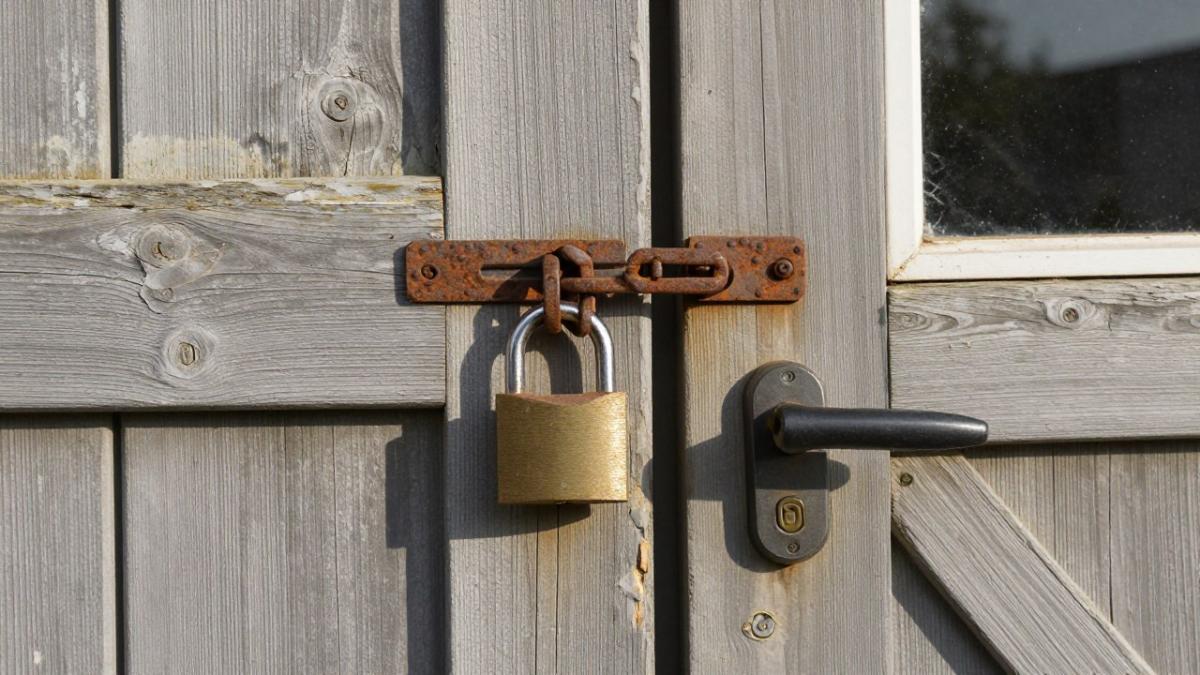
A padlock is only as strong as the hardware holding it. Most shed doors hang a hasp and staple on thin wood, and a pry bar pops the screws in seconds.
The lock itself is usually fine. The mounting is the weak point.
Here is the honest math. A padlock guards one point of attack. A shed door has several: the hinges, the latch side, the frame, and the panel itself. A thief picks the easiest one.
A shed lock upgrade works when it moves the locking point into the door body or spreads the load across a steel plate. Below, we compare the common options and which fits a wooden door, a double door, or a metal building.
Shed Locks and Latches: A Side-by-Side Comparison
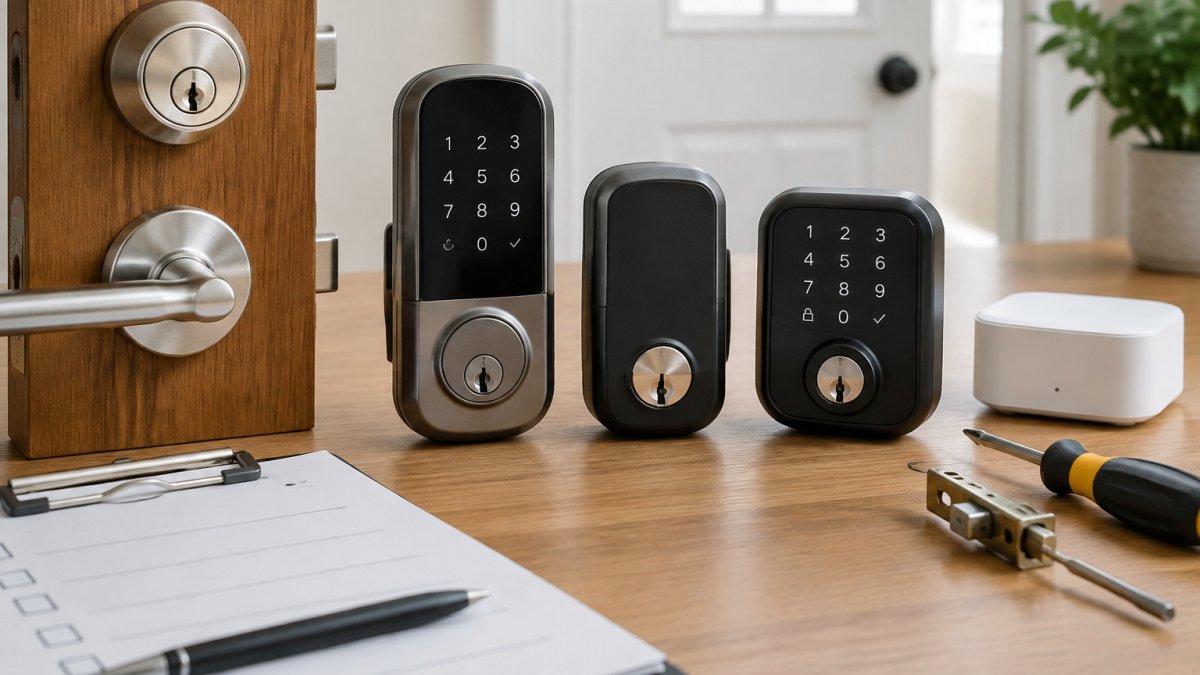
The four main alternatives to a padlock are rim locks, T-handle locks, keypad and smart locks, and heavy-duty lock-out devices. Each trades convenience, cost, and installation effort differently, so the right pick depends on your door construction, your risk level, and what you store inside. The table below compares them on the decision factors that actually matter: security mechanism, hardware cost, installation tools and time, door compatibility, and best use case.
If you want general guidance before committing, our guide on how to choose residential door locks walks through the same decision process for house doors.
Security Mechanism Comparison Table
| Lock Type | How It Secures | Typical Hardware Cost | Installation Tools and Time | Door Compatibility | Best For |
|---|---|---|---|---|---|
| Rim lock / rim deadbolt | Surface-mounted bolt throws into a keep on the frame | $20-$40 | Drill, screwdriver, chisel; 30-45 min | Wooden single doors with a solid frame; not for thin hollow-core or metal doors without a backing plate | Wooden single shed doors |
| T-handle lock | Keyed cylinder inside the handle turns an internal bolt or latch bar | $12-$25 | Screwdriver, drill; 20-30 min | Shed and barn doors with an existing T-handle cutout; not for sliding or double doors without modification | Shed and barn doors |
| Keypad / smart lock | Electronic deadbolt released by code or app | $150-$250 | Screwdriver, drill; 30-60 min; needs a compatible deadbolt and door thickness | Single doors with a standard deadbolt prep; not a drop-in for thin shed doors or metal doors without an adapter | Keyless entry, monitoring |
| Lock-out device | Steel cover over the handle secured by a padlock | $25-$45 plus padlock | Screwdriver; 10-15 min | Fits over most existing knobs and handles; not for sliding doors or flush-mounted latches | Extra layer on a weak door |
Pros and Cons of Each Alternative
- Rim lock: More secure than an external hasp because the bolt is not exposed, but it needs drilling into the door face and a solid frame to anchor the keep. On a thin or hollow door, the screws can pull out under force.
- T-handle: Clean look and weather-resistant, and it replaces the flimsy factory latch without adding new hardware. Security rests entirely on the cylinder quality and the internal bolt seating into a steel keep rather than a plastic catch.
- Keypad or smart lock: No keys to lose, temporary codes for contractors, and activity logs. It needs a compatible deadbolt and door thickness, depends on batteries, and can lock you out in a cold snap if the battery dies.
- Lock-out device: Very hard to bypass because it covers the handle, but bulky, still needs a padlock to secure it, and does nothing for the hinges or frame.
Matching the Lock to Your Door Type
Door construction narrows the choice faster than any other factor. A thin wooden shed door with a weak or narrow frame will not hold a heavy rim lock without a steel reinforcement plate behind the lock body and longer screws that reach the frame studs.
Watch out: buying a rim lock or smart lock before checking door thickness and frame condition is the most common mistake; a lock that cannot anchor to solid material is no better than the padlock it replaced.
Typical hardware cost by shed lock type
Rim Locks and Rim Deadbolts: Surface-Mounted Security
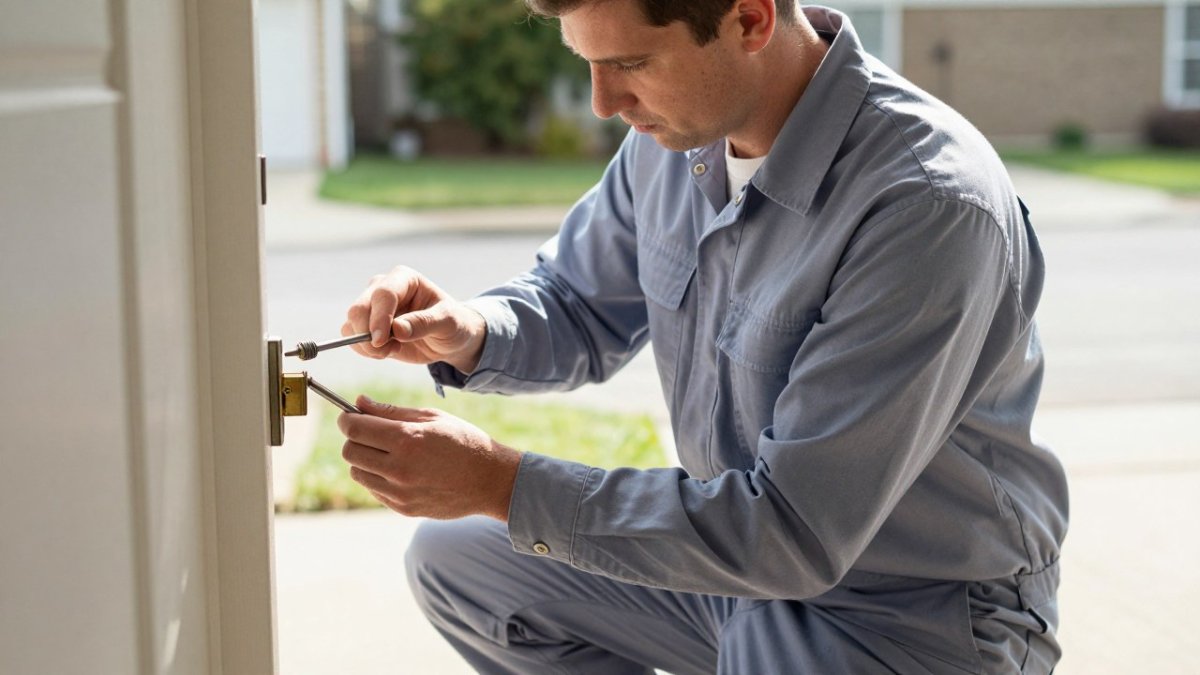
A rim lock is a surface-mounted lock that bolts into a keep fixed on the door frame. It sits on the inside face of the door, so there is no exposed shackle for a thief to cut.
This is the simplest step up from a padlock. You drill and screw the body to the door, fit the keep to the frame, and the bolt slides home when you turn the key. No mortising, no chiseling a pocket into the door edge.
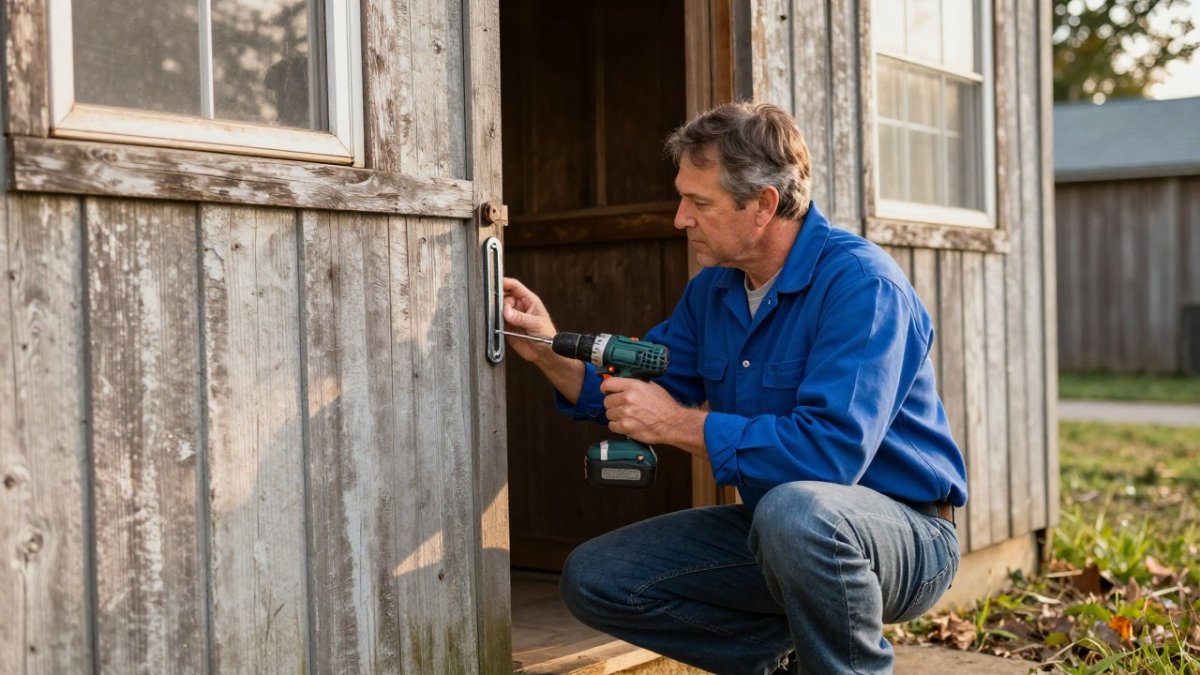
One trade-off deserves a plain warning. Rim locks fix to the door with wood screws, and a determined intruder can sometimes split the timber around them. Fit a steel reinforcement plate behind the lock body to spread the load, and use longer screws that reach the frame studs where you can.
T-Handle Locks: Shed-Specific Hardware That Replaces the Latch
A T-handle lock replaces the flimsy factory latch on a shed door with a keyed handle that turns a bolt or latch bar. It is the most natural fit for a shed because the door already has the cutout.
These units are built for outdoor use, with weather-resistant finishes that resist corrosion better than a bare steel hasp. The rotating handle operates an internal mechanism, so there is nothing external to cut.
The catch: security lives or dies on the internal cylinder. A cheap T-handle with a soft cylinder is no better than a padlock. Look for a unit with a solid cylinder and a bolt that seats into a steel keep, not just a plastic catch.
Keyless Shed Lock Options: Smart Locks and Keypad Entry
A keyless shed lock removes the key entirely, using a keypad code or a phone app to release the deadbolt. Keyless keypad and smart locks are available in a range of prices, and pricing depends on the model you choose. Contact A-1 Locksmith or visit our website for current pricing or a quote.
That price buys real convenience. You can give a contractor a temporary code, check an activity log, and stop hiding a spare key under a flowerpot. For a shed holding tools or equipment, remote alerts are genuinely useful.
Two practical limits matter. First, the lock needs a compatible deadbolt and door structure, so it is not a drop-in for every shed. Second, electronic locks depend on batteries, and a dead battery in a cold snap can lock you out of your own building. If you are weighing the wider picture, see our comparison of smart locks versus traditional locks, and our piece on whether smart home locks are worth it before you spend.
Heavy Duty Shed Door Locks: When You Need Maximum Pry Resistance
Heavy duty shed door locks matter when the shed holds thousands of dollars in tools, a generator, or a motorcycle. At that point, a surface lock alone is not enough, and the goal shifts from deterrence to slowing a determined break-in.
The strongest setups combine a hardened deadbolt or jimmy-proof lock with steel reinforcement plates on both the lock and the frame. A jimmy-proof design interlocks the door and frame so a pry bar cannot spread them apart.
This is where professional installation pays for itself. A lock fitted into a reinforced frame resists forced entry far better than the same lock screwed to thin timber. If you want serious hardware fitted properly, our team can review our locksmith services and match the lock to your door and contents.
The Best Lock for Shed Double Doors: Solving the Two-Door Problem
Double doors are the hardest shed to secure because they meet in the middle.
The standard approach has three parts:
- Fit a rim deadbolt or T-handle lock on the active leaf, the one you open every day.
- Add flush bolts at the top and bottom of the inactive leaf, so it cannot swing once the first door is locked. Flush bolts sit inside the door edge and slide into the header and threshold, and they are much harder to defeat than a surface bolt.
- Fit a heavy-duty drop bolt or a pair of cane bolts into the floor and header for extra hold on wide or heavy doors.
The result is that both leaves are anchored, not just one.
Door compatibility matters here more than anywhere else. Flush bolts need enough door thickness to mortise into, usually at least 1-3/4 inches, so thin shed doors may need surface-mounted cane bolts instead.
Installation is fiddly and easy to get wrong. Flush bolts require cutting a mortise into the door edge, and a misaligned bolt will not seat into the strike.
Watch out: fitting a lock to the active leaf without securing the inactive leaf is the most common double-door mistake; the inactive leaf becomes the easy way in.
A weak header can undo good hardware, so the frame and header should be checked before fitting.
Layered Security Beyond the Lock: Reinforcing the Door and Frame
The best lock fails on a weak door. Layered security means hardening the door, frame, and hinges so the lock has something solid to hold onto.
Start with the hinges. Exterior hinges on a shed can be popped with a screwdriver, so fit security hinges or weld a hinge bolt.
None of this is complicated, but it is fiddly work, and a badly fitted plate can weaken the door. If you would rather have it done right, contact our team to assess your shed and fit the reinforcement.
Your shed holds what you paid for, and a padlock on thin wood is not the protection most people assume it is. A-1 Locksmith has served Huntsville since 1970, with licensed and insured technicians.
Frequently Asked Questions
What can I use instead of a padlock on my shed door?
Rim locks, T-handle locks, keypad deadbolts, and heavy-duty lock-out devices are the main alternatives. A rim lock mounts to the door surface, while a T-handle lock replaces the factory latch. Keyless options are also available; contact A-1 Locksmith or visit our website for current pricing or a quote. Each removes the exposed shackle that bolt cutters target on a padlock, so the shed lock is harder to defeat with hand tools.
Are keyless shed locks suitable for outdoor use?
Yes, but check the weather rating before buying. Electronic keypad and smart locks need a temperature range that covers your area and a battery that holds up in cold months. Keyless locks of this type typically run on batteries and need a compatible deadbolt. If power or Wi-Fi drops, keypad entry still works, but remote access does not. Keep a mechanical backup key stored off-site.
What is the best lock for shed double doors?
Double doors need a lock that ties both leaves together. The common setup is a heavy-duty hasp and staple rated for outdoor use, paired with a rim lock or a pair of T-handle locks. For the strongest hold, add a cane bolt or drop rod into the ground on the inactive leaf and lock the active leaf with a deadbolt. A locksmith can confirm the door stiles are thick enough to hold the screws.
Can you install a deadbolt on a wooden shed door?
A standard deadbolt needs a door at least 1-3/8 inches thick and a frame solid enough to hold the strike plate. Many shed doors are thinner or built from soft wood, so a surface-mounted rim deadbolt is often the better fit. It screws to the face of the door and the frame without mortising. Reinforce the strike side with a metal plate so the screws cannot be split out.