 How-to
How to Verify a Licensed Locksmith's Credentials
Last Updated: November 8, 2026
Quick Summary
To verify locksmith credentials, first get the company name and license number, then look them up in the official database of your state's licensing agency, usually a .gov site. An active record with matching name and address means the credential is valid. Where no state license exists, confirm the local business license and liability insurance instead.
- Ask for the full business name, license number and technician name before the locksmith arrives.
- Search the official state licensing agency database, not third-party lookup sites that may be stale.
- An expired, suspended or revoked record means do not hire until resolved or move on.
- Ask for a certificate of insurance and confirm the insured name matches the business name.
- Save a screenshot or printed copy of the record, including the date and agency name.
Table of Contents
- Why Verifying a Locksmith's Credentials Matters Before You Call
- Locksmith License Requirements: Texas and Beyond
- How to Verify Locksmith Credentials Online, Step by Step
- Confirming Insurance and Local Permits
- Questions to Ask a Locksmith Before Hiring
- How to Avoid Locksmith Scams and Report Fraud
- Booking a Verified Locksmith Before Your Next Lockout
- Frequently Asked Questions
Why Verifying a Locksmith's Credentials Matters Before You Call
A locksmith can open your door quickly, and that is exactly why you should check who you let in. Learning how to verify locksmith credentials takes about ten minutes and can save you from theft, overcharging and bad work.
Federal Trade Commission consumer advice on avoiding home repair scams
Scam operators sometimes advertise a local-sounding name and quote a low price that changes on arrival. Checking credentials first gives you a clear way to screen that out.
Here is what a credential check can tell you:
- Whether the person or company holds a license where you live
- Whether the license is current and in good standing
- Whether the business carries liability insurance
- Whether the name on the van matches the name on the paperwork
A license alone is not a guarantee of quality. Still, it proves the locksmith has met the requirements set by a licensing authority, and it gives you someone to complain to if something goes wrong.
Locksmith License Requirements: Texas and Beyond
Locksmith licensing is handled at the state level, and the rules differ sharply from one state to the next. Some states license locksmiths, some require only business registration, and some do not license the trade at all.
Because there is no single national locksmith license, the first job is to find out which authority, if any, governs the trade where you live.
States with no statewide locksmith license: A handful of states do not license locksmiths at all. That does not mean the trade is unregulated, local permits, business registration, and consumer protection laws still apply.
Key points to keep in mind:
- A license may apply to the individual technician, the business, or both, ask which one the number covers
- Requirements can change, so check the official source rather than a directory site
- A locksmith licensed in one state may hold a different credential than the one you expect in another
- Where no state license exists, ask about insurance, business registration, and experience instead
Texas Department of Licensing and Regulation locksmith program
If you are unsure what applies to your situation, ask the locksmith directly which license number covers the work and where it was issued.
How to Verify Locksmith Credentials Online, Step by Step
Most state licensing agencies run an online lookup tool, and a few minutes on your phone or computer can confirm whether the person or company at your door holds a valid credential. The steps below cover the lookup and, just as important, how to read what comes back.
Step 1: Get the Locksmith's Name and License Number
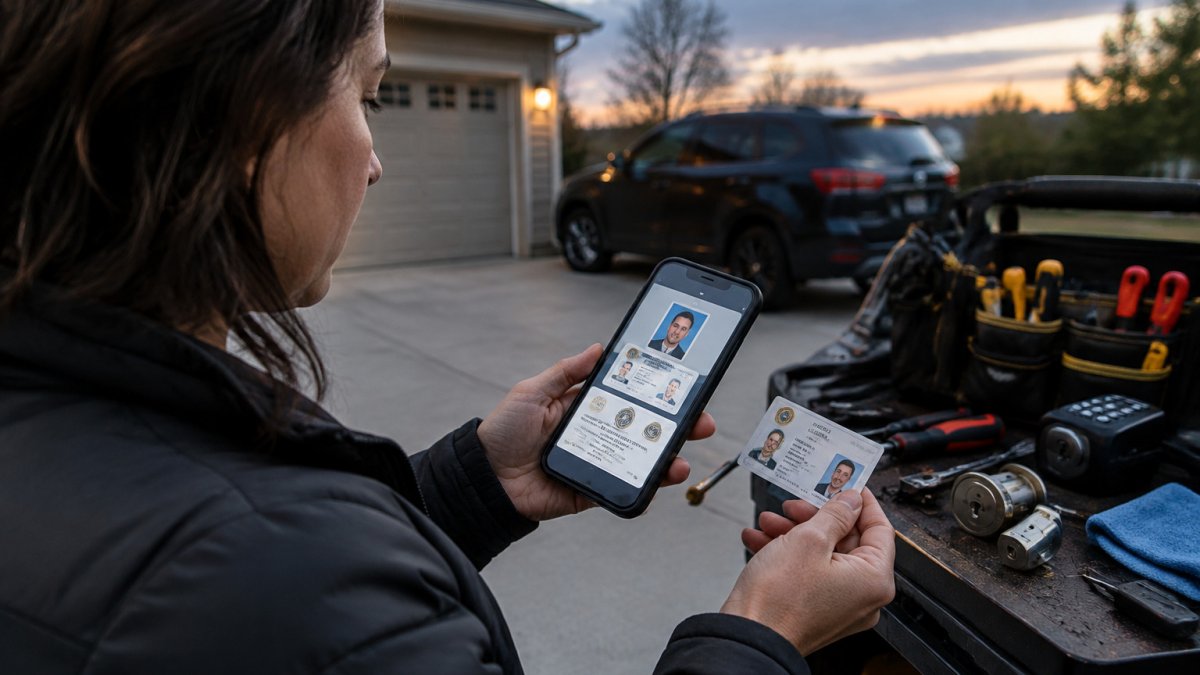
Ask for the full business name and the license number before the technician arrives. Write both down, along with the name of the person who will do the work. A reputable company will give this to you without hesitation.
Step 2: Find the Right Licensing Authority
Search for the state agency that licenses locksmiths, and use the official government site, which usually ends in .gov. Avoid third-party sites that charge for lookups or that republish stale records. If your state does not license locksmiths, move to the local check described below.
Step 3: Search the Official Database
Enter the license number first, if you have it. If not, search by the business name or the technician's name. Compare the spelling carefully, since small differences can point to a different company. Some databases let you search by city or ZIP code, which helps when the company uses a trade name that differs from its legal name.
Step 4: Read the Record, Not Just the Status
Once you find a record, read the status and the identifying details together. An active license means the credential is currently valid. An expired license means it lapsed and was not renewed. A suspended or revoked license means the state has removed or limited the right to work. A mismatched record means the name, address, or number does not match what the locksmith gave you.
What to do with each result:
- Active: Proceed, but confirm the name and address on the record match the company and the technician at your door
- Expired: Ask why, and do not hire until it is renewed and you have seen the updated record
- Suspended or revoked: Do not hire this person or company, and consider reporting the solicitation to the agency
- Mismatched: Ask for clarification, and walk away if the answer does not add up
Watch out: a record that matches the business name but lists a different owner or address than the one on the van is a common pattern in scam operations that borrow a real license number.
Step 5: Save a Copy of the Result
Take a screenshot or print the record, including the date and the agency name. This gives you proof of what you saw, in case the details change later or you need to file a complaint.
When There Is No Online Lookup
Some jurisdictions do not offer a public database, and some do not license locksmiths at all. In that case, call the licensing agency or the city or county business license office directly and ask whether a credential is required and whether the company holds one. Ask the locksmith for a certificate of insurance and confirm the insured name matches the business name. A decision tree helps here: if a state license exists, verify it; if not, verify the local business license and insurance; if neither can be confirmed, treat the job as higher risk and consider another provider.
Searching by Business Name or Licensee Name
Business names are often similar, and some companies use a trade name that differs from their legal name. If a search by business name returns nothing, try the technician's name or the license number on the van or invoice. A mismatch between the name on the truck and the name in the database is a warning sign worth investigating before you let anyone work on your lock.
The steps below cover the lookup and how to read what comes back, summarised here for quick reference.
| Result | What it means | What to do |
|---|---|---|
| Active | The credential is currently valid | Proceed, but confirm the name and address match |
| Expired | The credential lapsed and was not renewed | Do not hire until it is renewed and the updated record is seen |
| Suspended or revoked | The state has removed or limited the right to work | Do not hire, and consider reporting the solicitation |
| Mismatched | Name, address or number differs from what was given | Ask for clarification and walk away if the answer does not add up |
Confirming Insurance and Local Permits
A license does not always show whether the company carries insurance. Ask for a certificate of insurance, which the locksmith can usually send by email or text. Liability insurance protects your property if the technician damages your door, lock or vehicle during the job.
Some cities and counties also require a business or occupational permit. Ask whether the locksmith holds one for the city where your property sits. Your local city or county office can confirm this.
Quick checklist for insurance and permits:
- Request a certificate of insurance and check the coverage dates
- Confirm the insured name matches the business name
- Ask whether the company holds a local permit for your area
- Get the permit number in writing if it is required
Questions to Ask a Locksmith Before Hiring
When you call, a few direct questions can reveal a lot. A legitimate locksmith will answer them plainly.
Ask these before the technician arrives:
- What is your license number, and which state issued it?
- Are you insured, and can you send a certificate?
- Will you give me a firm price over the phone, including any trip or after-hours fees?
- What is the name of the person who will be coming out?
- Will you show ID and a company vehicle when you arrive?
Be cautious if the company refuses to give a license number, insists on cash only, or will not confirm a price before arriving. Those are common signs of a scam.
For more on evaluating providers, read our guide on how to find a reputable locksmith you can trust. If pricing worries you, our article on how to avoid locksmith hidden fees explains what to watch for on the bill.
How to Avoid Locksmith Scams and Report Fraud
Locksmith scams usually follow a pattern. A low advertised price gets you to call, then the technician adds fees or claims the job needs more work than expected. Some operators drill locks they could have opened, which forces you to buy a new one.
Warning signs to watch for:
- An unmarked van or a company name that changes between calls
- A quote that rises sharply once the locksmith is on site
- Pressure to pay before any work is done
- No license number or insurance information offered
FBI guidance on reporting consumer fraud
If you suspect fraud, stop the job, keep your receipts and call the state licensing agency to report it. You can also report the business to your state attorney general's consumer protection office.
For a sense of normal arrival and response times, see our article on emergency locksmith response time expectations. A response time far faster than typical, or a promise you cannot confirm, can also signal a scam.
Booking a Verified Locksmith Before Your Next Lockout
When you are locked out, it is hard to think clearly, which is why it pays to check credentials before you need help. Save the license number and insurance details in your phone now, so you have them ready.
At A-1 Locksmith, our licensed and insured technicians are happy to share their license information before they arrive. We serve Huntsville and the surrounding area. To see what we offer, visit our services page, or reach out through our contact page to confirm your credentials and schedule service.
Get in touch with A-1 Locksmith to confirm your credentials and book a verified locksmith today.
Frequently Asked Questions
How can I verify a locksmith's license online?
Start by identifying which state or local agency licenses locksmiths where the service will happen. Texas-specific checks run through the state's licensing authority, and many states publish searchable online databases. Enter the locksmith's full name or business name, then compare the license number, status, and expiration date with what the technician shows you. If the database lists no record, the business may not be licensed in that jurisdiction, and you should ask for an explanation in writing before work begins.
How do I know if a locksmith is licensed and insured?
Ask for the license number and proof of liability insurance before the technician starts work. Confirm the license number against the official licensing database for the state or county where the work is performed. Ask for a certificate of insurance and check that the policy is active. A legitimate company will provide both without hesitation, and a locksmith who refuses or delays should raise concern.
What is the difference between a locksmith license and certification?
A license is a legal authorization from a government agency to perform locksmith work in a jurisdiction, and it is often required by state or local law. A certification is typically issued by a trade organization after training or testing, and it shows specialized skill but does not grant legal permission to operate. Verify the license first, then treat certifications as added evidence of training.
What should I ask a locksmith before hiring them?
Ask for the license number, proof of insurance, and the business's physical address. Request a written, itemized quote that includes the service fee, labor, parts, and any after-hours or trip charges, so you can compare it with the final invoice. Ask whether the technician will check your identification before opening a lock, and ask how long the company has served your area. Clear answers to these questions are a strong indication of a trustworthy provider.