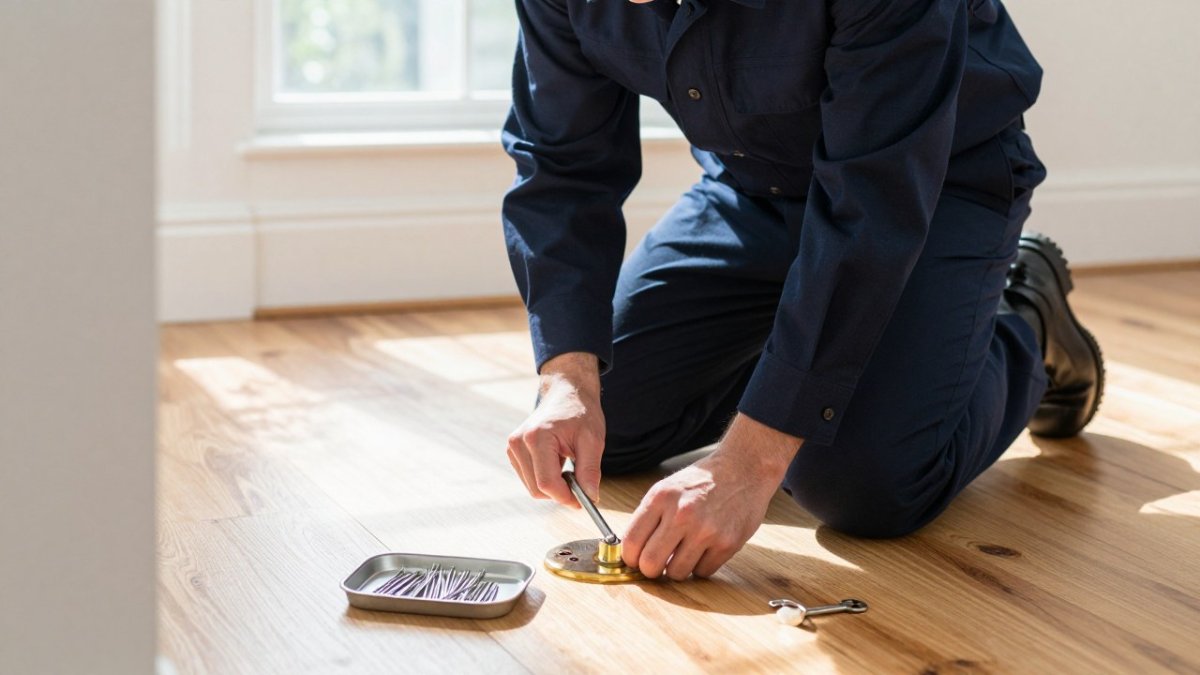
 How-to
How to Rekey Home Locks: A Step-by-Step DIY Guide
Quick Summary
To rekey home locks, you remove the cylinder, replace the internal pins so a new key works and the old one does not, then reinstall it. Start by confirming the lock is a serviceable pin-tumbler cylinder that a matching rekey kit can fit. Rekeying is often a sensible first move when the hardware is sound and you only need to control access.
- Rekeying changes the pin stack inside your existing lock so only the new key works.
- Confirm the lock is a pin-tumbler cylinder and that the kit lists your exact brand and model.
- A pinning chart matched to your key code is the most important tool for the job.
- Replace the lock instead of rekeying if it sticks, feels loose, or turns without resistance.
- Rekeying does not upgrade an easy-to-pick lock; it only changes the key.
Table of Contents
- When Rekeying Makes More Sense Than Replacing a Lock
- Checking Lock Compatibility and Identifying Your Lock Type
- Choosing a Rekey Kit and Gathering Your Tools
- How to Rekey a Lock to Match an Existing Key
- How to Rekey a Deadbolt Lock Step by Step
- Troubleshooting After Reassembly and Testing the New Key
- When to Call a Locksmith Instead of Rekeying Yourself
- Frequently Asked Questions
When Rekeying Makes More Sense Than Replacing a Lock
Rekeying changes the pin stack inside your existing lock so a new key works and the old one does not.
Common reasons to rekey include moving into a home you didn't build, losing a key, or retiring keys held by a former tenant or contractor.
Replace the lock when the hardware is worn, bent, or failing. Compare rekeying and replacing in full before you decide.
Watch out: rekeying doesn't upgrade the security of an older lock.
Checking Lock Compatibility and Identifying Your Lock Type
Before you buy anything, confirm your lock can be rekeyed. Check smart lock compatibility for your door setup if your lock is electronic or keyless.
Note the brand name stamped on the cylinder face or back plate, since the manufacturer determines which rekey kit and pin set you need.
Some locks use a removable core you can swap without touching the door; others have a fixed cylinder that must be taken apart in place.
Reading the Cylinder to Confirm the Lock Family
Compatibility starts with identifying the lock family, not just the brand. Standard residential locks fall into a few recognizable groups, each taking a different kit.
- Pin-tumbler cylinders. The most common residential design. You can see a row of small holes or a pin chamber line on the plug face, and the key has a series of cuts along one edge. These are the locks most rekey kits are built for.
- Wafer and disc cylinders. Common on cabinets, some entry sets, and lower-cost hardware. The key often has cuts on both edges or a flat profile, and the internal mechanism uses flat wafers rather than round pins. Standard pin kits will not fit.
- Removable-core and interchangeable-core cylinders. Often found on commercial-grade or higher-security residential hardware. The core pulls out with a control key or a special tool, and the pin stack lives inside the core rather than the housing. Kits for these are brand-specific.
A practical check: remove the interior trim plate and look at the back of the cylinder. If you see a small retaining clip or a set screw holding the plug, it is likely a standard pin-tumbler you can service.
Measuring the Cylinder and Matching the Kit
Even within one brand, cylinders come in different lengths and diameters, so a kit that fits a doorknob cylinder may not fit a deadbolt from the same maker.
Measure the cylinder body length from the face plate to the back of the housing and note the diameter, then compare against the kit's compatibility list.
Watch out: a kit that lists only the brand and not the model is a gamble.
Confirming the Keyway and Key Code
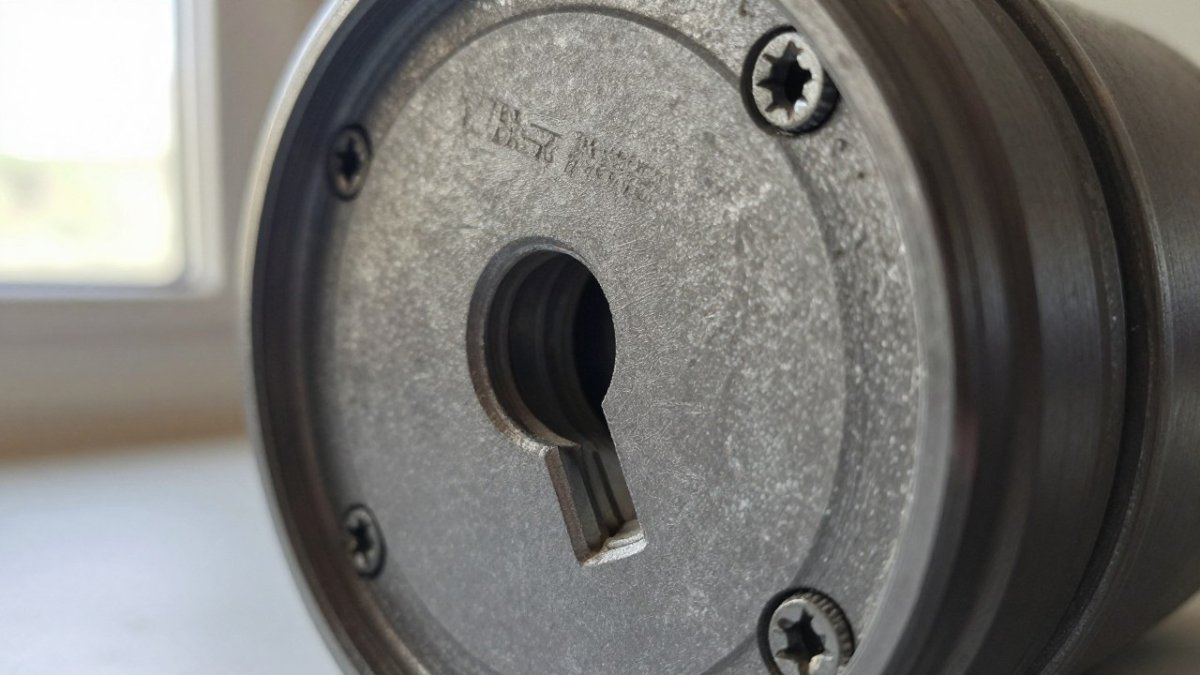
The keyway shape is a quick identifier: a wide, simple slot usually means a standard residential cylinder, while a narrow or paracentric keyway points to a higher-security or restricted-key system that may require a dealer or locksmith to cut keys.
If you have the original key code, often stamped on the key bow or a tag that came with the lock, write it down.
A Five-Minute Pre-Purchase Checklist
Before you order a kit, confirm all five of these:
- The lock family is pin-tumbler and serviceable.
- The brand and model are both listed on the kit's compatibility chart.
- The cylinder length and diameter match the kit's supported range.
- The keyway is not a restricted or dealer-only design.
- You have either the key code or a pinning chart that covers your lock.
If any item fails, buy a kit made for that specific lock or have a locksmith handle the rekey. A wrong kit costs more in wasted time than a correct one costs up front.
Choosing a Rekey Kit and Gathering Your Tools
A rekey kit includes the pins, springs, and tools needed to rebuild a cylinder with a new key pattern, which is what you need if you plan to rekey home locks yourself. Buy one made for your lock's brand; generic kits often have pins that don't fit well, causing binding. Guidance on choosing residential door locks can help you select the right hardware.
You'll need a few basic tools. Keep these close at hand before you start:
- A screwdriver that fits the lock's mounting screws
- A plug follower, the tool that holds the cylinder plug in place
- A pin tool or small hook for lifting pins
A pinning chart is the most important item. It shows which pin lengths match each key cut. Work on a clean surface so no pins roll away.
The article lists the basic tools you will need before starting a rekey.
| Tool | Purpose | Note |
|---|---|---|
| Screwdriver | Fits the lock's mounting screws | Must match the screws |
| Plug follower | Holds the cylinder plug in place | Keeps pins from escaping |
| Pin tool or small hook | Lifts pins | Used to remove old pins |
| Pinning chart | Matches pin lengths to key cuts | Most important item |
| Flat, well-lit surface | Work area | A kitchen table works |
| Small tray or cup | Holds pins in order | Prevents pins rolling away |
How to Rekey a Lock to Match an Existing Key
Rekeying a standard cylinder follows a clear sequence. Take your time and keep the pins in order, since a mistake means starting over.
Removing the Lock Cylinder and Accessing the Pin Chambers
First, remove the cylinder from the door. Usually you'll loosen a set of screws on the inside of the door, then slide the cylinder out from the outside.
Once the plug is out, you can see the pin chambers. Each chamber holds a stack of key pins and driver pins. Pull the plug follower into place to keep the pins from escaping.
Swapping Tumbler Pins and Reassembling the Cylinder
Use the pinning chart and your new key code to pick the correct pin lengths.
Make sure each spring sits on top of its driver pin, then press the set into the chamber until the top sits flush.
When all chambers are filled, slide the plug back into the housing. Reattach the retaining clip, then reinstall the cylinder in the door.
How to Rekey a Deadbolt Lock Step by Step
A deadbolt follows the same basic process as a standard cylinder, but the layout can be a little different.
Unscrew the mounting plate from the inside of the door and pull the cylinder out from the outside.
Follow the same steps covered above: remove the clip, free the plug, change the pins, and reassemble.
Watch out: deadbolts carry the most weight in the door frame.
Troubleshooting After Reassembly and Testing the New Key
If the new key doesn't turn, the most common cause is a pin set installed in the wrong order.
If the key turns but feels rough, a pin may be sitting too high or too low.
If the lock works with the new key but the old key still turns it, a pin was probably not replaced.
Test the lock several times from both sides of the door before you trust it.
Diagnose by Symptom, Not by Guesswork
A pin-tumbler cylinder only turns freely when every key pin sits exactly at the shear line, the boundary between plug and housing. Any symptom after reassembly traces back to a pin above or below that line, a spring out of place, or a problem outside the cylinder.
Work through the symptoms in this order:
- Key will not insert fully. A pin or spring is protruding into the keyway, or the plug was reinstalled with a pin out of its chamber. Do not force the key. Remove the plug and check that every chamber is clear and every pin is seated below the shear line.
- Key inserts but will not turn at all. One or more pin stacks are wrong. A pin that is too long binds above the shear line; a pin that is too short leaves a gap. Compare each chamber against the pinning chart for the new key's cuts.
- Key turns with a grind or catch. A single chamber is off by one pin size, or a spring is cocked sideways. The bind usually happens at the same point in the rotation each time, which tells you which chamber to inspect.
Check the Door Before You Blame the Cylinder
A surprising share of "bad rekey" problems are actually door-alignment problems.
A quick test: remove the cylinder from the door and test the key in the cylinder alone. If it turns smoothly off the door, the pinning is correct and the problem is alignment.
Watch out: do not lubricate a binding cylinder to mask a pinning error. Lubricant can free a slightly stiff pin but will not fix a pin of the wrong length, and it can collect debris that makes the next service harder.
Know When to Stop
Repeated disassembly wears the plug and retaining clip, and small springs are easy to lose. If you have taken the cylinder apart twice and the key still binds, stop.
Call a locksmith if any of these are true:
- A pin or spring is lost and you do not have a replacement of the correct size.
- The plug will not slide back into the housing without force.
- The cylinder is damaged, cracked, or has a stripped retaining screw.
A locksmith can re-pin the cylinder on a bench and confirm the door hardware is aligned.
When to Call a Locksmith Instead of Rekeying Yourself
Rekeying yourself is reasonable for a healthy lock on a standard door. Call a professional when the lock is damaged, you can't identify the lock type, or the cylinder won't come out.
Call a professional right away if you are locked out, the lock has been forced, or you suspect someone has a copy of your key and need the locks changed quickly. Browse our locksmith services to see what we can handle for you.
A-1 Locksmith has served Huntsville since 1970 with licensed and insured technicians. Our team can help with rekeying, lock replacement, and choosing a better lock. Contact A-1 Locksmith for a quote and to schedule a visit.
Frequently Asked Questions
Can I rekey my locks myself?
Yes, many homeowners can rekey standard pin tumbler locks with a basic rekey kit. The process involves removing the cylinder, swapping the pins to match a new key code, and reassembling the lock. It works best on common residential deadbolts and knob locks from major manufacturers. Locks with high-security or restricted keyways, and locks that are damaged or worn, are better left to a professional locksmith because errors can leave the lock unusable.
Is it easier to rekey a lock or replace it?
Rekeying is usually easier and less expensive than replacing a lock, because the existing hardware stays in place and only the internal pins change. Replacement makes more sense when the lock is damaged, outdated, or does not meet your security needs. Rekeying is a good choice after moving into a home, losing a key, or when you want to limit who can open the door without changing the hardware.
How long does it take to rekey a home lock?
A first-time DIYer should plan on roughly 30 to 60 minutes per lock, including removing the cylinder, changing the pins, reassembling, and testing. Experienced people often finish faster. Doing several locks at once, such as the front door, back door, and garage, takes longer, so give yourself extra time. If you run into a stuck pin or a cylinder that will not release, stop and consider calling a professional.
Can I rekey a lock to match an existing key?
Yes. Matching an existing key means setting the new pin configuration to the same key code as a key you already have, so both keys open the lock. You can determine the bitting code from the existing key or use a pinning chart. Be sure the lock and key are compatible with your rekey kit, and test the new key carefully before finishing. Keep in mind that anyone holding a matching key will still have access.